
The Vanishing Point: Val McDermid

imageThe Wire in the Blood series is one of my all-time favourite TV crime shows. I love forensic psychologist Tony Wood’s tetchy relationship with detective Carol Jordan. I’ve read and enjoyed a few of the books in the series, as well as other novels written by the well-known Scottish crime writer, Val McDermid, so I was expecting a similar thrilling read from her stand-alone novel, The Vanishing Point.

But… The Vanishing Point didn’t quite do it for me.

With the words “It’s every parents worst nightmare…” emblazoned on the cover, there is no surprise that this is an abduction story – though it has a characteristic McDermid twist. The opening is as thrilling as it is horrifying. A woman, Stephanie, used to be the ghost writer for Scarlett, a now-deceased reality TV celebrity, and godmother and newly-appointed guardian of Scarlett’s five-year-old son, Jimmy. Stephanie has just arrived in the US with Jimmy, about to start a vacation, when the boy is taken in broad daylight from the airport while Stephanie is being checked through security.

In her effort to run after Jimmy and his abductor, Stephanie attracts the attention of airport security, thus providing the reason for her to be kept in custody for hours telling her story to Vivian, a helpful FBI agent. Stephanie discloses how she came to be the child’s guardian, what happened to the boy’s celebrity parents, and details of her own terrifying experiences with an abusive and controlling ex-boyfriend. Throughout her tale, the reader is invited first to suspect one character and then another of abducting the boy. The ex-boyfriend, the resentful cousin – even possibly Scarlett’s agent – all fall under suspicion.

As a narrative device for telling the story, the FBI interview technique is okay, though it does stretch credulity and I guessed the “mystery” element pretty early on. Guessing a mystery for me is not uncommon, but normally, when that happens, there’s something else that keeps me drawn into the story, concern for the characters’ fate perhaps, or an interest in the world the characters inhabit. In the case of The Vanishing Point, neither of those things happened.

For me, the celebrity world of reality TV, even set against a backdrop of News of the World-type phone tappings and the UK music scene, just isn’t compelling. More importantly, I never quite believed in the friendship between Scarlett and Stephanie – a crucial element in the story – which I’m tempted to put down to a lack of depth in characterisation. I finished the book, could even admire elements of the ending, but didn’t have that “Aha!” satisfied feeling of a really good thriller.

It wasn’t a bad story; but nor was it one I’ll be racing off to recommend to my Facebook book group. For what it’s worth, I’d say time would be better spent downloading and watching the series Happy Valley, starring Sarah Lancashire, which just finished playing on ABC TV. Now that was compelling and thrilling crime drama. I was sorry to see it end.

~

Author: Val McDermid
Title: The Vanishing Point
Publisher: Little Brown
Year: 2012

I borrowed a copy from the library.
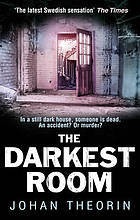
Swedish crime: Johan Theorin’s The Darkest Room

imageThe Darkest Room by Johan Theorin has been sitting on my To Be Read pile for a while. It was only when I finished it that I realised it’s the second of a quartet of books, each set on the island of Öland, Sweden’s second largest island and the smallest of its traditional provinces. Having said that, I think the series must be based more on the setting rather than any plot elements, as The Darkest Room reads like a stand-alone book.

WINTER 1846.

This is where my book begins, Katrine, the year when the manor house at Eel Point was built. For me the house was more than a house where my mother and I lived, it was the place where I became an adult.

…I have heard the dead whispering in the walls. They have so much to tell.

So begins the story of a house on Öland where a young couple, Katrine and Joakim, take up residence with their two children after a family tragedy in Stockholm. This is part of a story within a story, written by Katrine’s artist mother Mirja Rambe, herself the daughter of a famous artist. This secondary story is a tale of lives lost at the house over the centuries, and the souls of the dead who, according to local legend, come back at Christmas.

The larger narrative that makes up the central plot weaves around the points of view of three characters: Katrine’s husband, Joakim; Henrik, a petty criminal; and a police officer, Tilda, who has come to the island to establish a police presence at a time when the community is beset by burglaries and vandalism. These characters’ lives resonate with echoes of past injustices and family secrets. They are drawn together in a thrilling climax during a Christmas blizzard when their fates are decided.

The Darkest Room was voted Best Swedish Crime Novel of 2008 and it’s not hard to see why. The story captivates the reader from page one and keeps intriguing till the end.

~

Author: Johna Theorin
Publisher: Transworld
Date: 2009
ISBN:9780552774611
I own a copy.

Public Relations Ethics and Professionalism: The shadow of excellence by Johanna Fawkes

This book builds on a lifetime of reading, writing, thinking, dreaming, failing, starting again, denying, confronting, shifting and teaching.

Public Relations Ethics FawkesIf anyone had told me at the beginning of the year that I’d end up reading for pleasure – make that, devouring – a Jungian book on public relations, I’d have said they were dreaming. That was before I met Blue Mountains resident, writer and academic, Johanna Fawkes.

In her book Public Relations Ethics and Professionalism: The shadow of excellence, Fawkes writes much how she speaks, with intelligence, intuition and poetic flair. As the opening lines quoted above suggest, she is no stranger to nuances of language. She revels in them. It’s a feature of her writing that betrays the fact that she is not only a Senior Lecturer in Public Relations at Charles Sturt University, she is also a prize-winning writer, having completed a Masters in Creative Writing at Lancaster University and won numerous awards for her short fiction.

But public relations? How can a book on public relations be made readable for a lay audience and still provide enough intellectual rigour to be useful as a text book? With enviable skill Fawkes manages to do both. I read the book from cover to cover in a little over a day and was fascinated. Admittedly, I’m a bit of a closet Jung fan. The idea of exploring questions regarding ethics and public relations by teasing out the “shadow” side of the profession appeals to me – if public relations can indeed be regarded as a “profession”, when much of it, from a lay point of view, appears to deal with the art of persuasion in service of a client, at the limit of which is propaganda.

Fawkes’ discussion weaves in and out of these thorny issues in a way that surprised and stimulated me. I found myself thinking back to a unit I studied when doing a Graduate Diploma of Counselling, and the debates that were raging at the time between Counselling and Psychology – the “territory” wars between the two disciplines, and the tensions between which practices might be considered an “art” and which a “science”, and the attendant professional – and remunerative – ramifications. Fawkes’ book invites such pondering, making it relevant to professions generally, not just public relations. Public relations, in some sense, is the case study for the broader ideas she wishes to bring to our attention.

An aspect of the book I especially enjoyed was the way Fawkes introduces her own experience – including her own personal challenges – into the discussion. It’s a technique consistent with the postmodern breadth of her vision, and one I find particularly engaging.

While reading Chapter 7, “Towards a Jungian Ethic”, I began applying some of the ideas to myself personally. What shadow parts of myself do I reject and why? How might engaging those parts be transformative? By doing so, might I be freer to solve problems and limitations confronting me? Engaging further with these ideas since finishing the book has become an exciting journey, promising to open up all sorts of possibilities. All from a book on PR. That’s quite an achievement!

Public Relations Ethics and Professionalism: The shadow of excellence will be launched at the St James Ethics Centre in December. Unfortunately, it isn’t the kind of book you’re likely to stumble across down at your favourite bookshop. It costs too much for that. But you can order it from your academic library. It deserves the widest audience it can get.

~

Author: Johanna Fawkes
Title: Public Relations Ethics and Professionalism: The Shadow of excellence
ISBN: 9780415630382
Publisher: Routledge Taylor & Francis Ltd, United Kingdom
Date: June 2014

This review form part of my Australian Women Writers challenge for 2014.
My thanks to the author for the loan of a review copy.