The Danger Game: A great message, fairly rendered

Australian left-wing author Kalinda Ashton’s 2009 debut novel, The Danger Game, came to me indirectly. Recently I downloaded a collection of Aussie short stories on an iPad app from Sleepers, a small press based in Melbourne. Sticking out from among hundreds of stories was the bright shard of Ashton’s short fiction. Its sheer painful brilliance prompted me to hunt down her novel.

To claim The Danger Game is a “worthy” book seems miserly. But it’s true. It is worthy. It depicts suffering with compassion; doesn’t shy away from the complexities of poverty, drug use, sex, failure and loss; enacts the tensions of union politics, the under-funding of state schools and the shortcomings of the welfare system. It does all this with glimpses of that same lyrical grace that sang to me in Ashton’s short stories and had me wanting more.

What it didn’t do was grab me by the scruff of the neck and impel me through the narrative.

It interested me; and I persisted; but I can’t say I was riveted. Instead I found myself tempted to skip parts and I felt guilty.

Before writing this review, I checked out other reviews. Among those lauding the writing style and worthy politics were ones that found the story boring, including a reader who “wanted to know what happened at the end” and felt deflated because the ending wasn’t a surprise. The comments were depressing mostly because I’d felt twinges of the same. So, apparently, did one independent publisher who, according to Ashton,  saw an early draft and didn’t find it “compelling” enough.

Yet the structure is clearly intentional, as Ashton has stated: “I think what I’ve tried to do in the book is have a structure almost like an ‘anti-thriller’ where in fact all the information [the characters] find when they go on this quest is not in fact what is the catharsis or release but the journey back into their lives now, and finding something collective out of the experience.” (From an interview with Rebecca Starford in Readings.)

All this got me wondering. About Ashton. About what it means to want to write a value-rich work that is still page-turning, riveting, engaging enough to grab hold of that middle ground of readers who might be indifferent to the politics but who want that “quest” and catharsis; who, like me, want a great read. It got me thinking about the implications of my own desire to write such a book; the ambivalences of such a desire, as Ashton might say.

The questions I come away pondering are these. (Warning: some jargon ahead.) Are the dominant linear narrative forms of Hollywood exemplified, say, in the writers’ craft phenomenon Story by Robert McKee, inherently reactionary? By opting for such insistent, pervasive narrative structures is an author inevitably sustaining, supporting and upholding an existing system, one irretrievably implicated in injustices to do with gender, race/ethnicity and class? Is it only by abandoning such structures for more experimental forms that a truly political writing can be achieved?

If it’s true that the only way to be truly effective politically is to opt for experimental narrative structure, I can take a stab at why. The argument goes something like this. With the narrative drive to know “What happens next?”, readers identify with characters’ goals, and enjoy the tension-and-release produced as those goals appear successively attainable and farther away. But such a drive lulls the reader into a type of unconsciousness, where readers demand only the addictive “fix” of a narrative “pull”, punctuated by a satisfying cathartic denouement or (in the case of thrillers) surprise ending. By manipulating the reader into becoming such a future-seeker, the writer may make her book a page-turner, but in doing so she potentially takes attention away from the detail, the mundane and numinous, the insights into character, moments that a writer like Ashton evokes and celebrates with ease. Takes away, too, perhaps, the opportunity for thoughtfulness, for engagement, the mental space in which one’s preconceptions can be challenged and, possibly, transformed.

On the other hand…

If a lack of narrative drive tempts the reader to put the book down and not pick it up again, what has been achieved?

I’m not saying say that The Danger Game doesn’t have narrative drive: it does; but it’s subtle, weaves in and out of present and past, spreads itself over three characters’ stories told in three different narrative styles (first, second and third person). More importantly, the objects of desire – knowing the truth of what happened in the past and the whereabouts of a lost parent – are never felt to be imperative, let alone vital. They’re sought more as a bandaid is looked for when the gash requires stitches or, worse, when the life blood is seeping away. The real desires, love, wholeness, meaning and connection, seem so far beyond the likelihood of being achieved, the characters barely recognise them as needs. Thus when they stumble over them the achievement feels almost accidental.

Ashton’s narrative may not be especially gripping in terms of story, but it does keep faith with the experience of what it means to be human. Considering the result, I’m sure Ashton’s happy.

The Danger Game by Kalinda Ashton (Sleepers Publishing)

Creative Commons Licence
Review of The Danger Game by Kalinda Ashton by Elizabeth Lhuede is licensed under a Creative Commons Attribution-NoDerivs 3.0 Unported License.
Based on a work at elizabethlhuede.wordpress.com.
Permissions beyond the scope of this license may be available at http://www.elizabethlhuede.com.

Dream of being a writer? Try the Power of Positive Acting

A friend posted a link today to an article on the paradoxes of positive thinking.

“…when we focus solely on imagining the future of our dreams, our minds enjoy and indulge in those images as if they are real.  They might be reachable, realistic dreams or impossible, unrealistic ones, but none of that matters because we don’t bother to think about the odds of getting there or the hurdles that will have to be overcome.  We’re too busy enjoying the fantasy.” (Source)

It got me thinking, as usual. I’m a fantasist. Always have been.

In primary school, our class went on a holiday to a farm at Bullaburra in the Blue Mountains (just down the road from where I live now). I was in the naughty group who stayed up late listening to each other tell ghosts stories round the campfire. You know the stories. Like the one about the girl who hears stomping on the roof when her boyfriend disappears at a gas station (gas, not petrol, note) and then a voice telling her to run and not look back…

When my turn came I told the one about the headless motorbike rider, the guy who was decapitated when a sheet of metal slid off a truck trailer and caught him in the neck. I loved that story. One of my older brothers had told it to me one time when we were camping at Scotland Island and it had seemed so real, so vivid in my imagination, I knew it had to be true. Trouble was, as I told it, I also visualised it. Visualised so hard, I could see it. See it as clearly as if that headless guy was riding across the misty, dark paddock. Stumped neck bleeding, fists frozen to the handlebars, bike engine rumbling. Out there, coming towards us…

The problem was, I spooked myself. My words stuck in my throat; I went white as a sheet. Without telling anyone what was wrong, I was suddenly running across that paddock in the dew-damp grass, and crashing into the house, an eleven-year-old blubbering mess. Virginia Point’s poor dad who’d invited us to the farm freaked, called out to the helper mothers who looked on helplessly. I never recovered. I had to go back home early. For years, passing through Bullaburra gave me chills. Seriously. If you’ve ever been there, you’ll back me up: the place is creepy.

So, what am I getting at?

I can imagine things. Vividly. And for 20 years, I’ve imagined myself being a writer. Oh, I’ve done more than imagine. I’ve sat down at the computer and tapped out a million words. I’ve even submitted to competitions, imagining all my effort one day would lead to publication. One day.

Meanwhile, writing buddies started getting agents, contracts, release dates, invitations to speak at conferences, mega-buck advances, galley proofs (whatever they are), and review copies, and I let that all wash over me. I’m patient, right? And I was busy visualising my success, so it had to come to me. Problem was, I rarely, almost never submitted anything.

But this year, my strategy changed. My New Year’s resolution was to stop writing and start publishing. It was a good resolution, as resolution goes. Except for one, tiny thing. Yep, you guessed it. I still had to do something.

Let me paint a picture for you. All those stories I’d written over the years, the ones that had bravely travelled from my brain to the computer, had got stuck there. Stuck in a traffic jam bigger than that made by ants in the kitchen when they find Rodney’s homemade marmelade. Stuck in that delicious sweetness of possibility, of imagining, an ambrosia untainted by failure because none of them had ever been out there, never had the slightest chance of getting rejected. Always, there’s that sweet, sweet dream. One day they’d be published, right?

The problem was, it wasn’t up to them to do it. They weren’t about to leap out of the computer and make it happen. That tedious job was for someone else. Someone like – surely not? – their creator, the imaginer, the fantasist…(gulp)… me.

So, what exactly was needed? A good cold dose of pessimism. At some point, the cold shock finally hit me that nobody was going to publish my stories if I didn’t get them out there. I. Had. To. Act.

Easy, huh? So why has it taken me 20 years?

Then, yesterday, a week after I finally got off my imagination and jettisoned a bunch of stories into cyberspace, I received this in my Inbox:

“Just a note to let you know that your submission has passed its initial reading, and we are now considering it for inclusion in Andromeda Spaceways.”

Whoo-hoo! What a thrill. I updated my status on Facebook and my writing buddies cheered. I’d finally received an acknowledgement. Not a sale. Not even a Better Quality Rejection Letter (one of my previous year’s aims). A consideration. My story was through to a second round. It has a *chance* of publication.

Yet, when the fuss died down (and there was a fuss, thank you, buddies) I was left feeling just a little bit foolish.

Somehow the rest of that saying about positive thinking had escaped me. The part that said it has to be followed up by positive acting. How come I never heard before?

So, little story, as you venture out into the second round, if those editors don’t like you, I won’t forget and let you languish. I’ll send you off on another journey into publication land. Again and again, if necessary, till you find a home.

Promise.

Here’s a photo of my writers group a few years ago. From left to right are Isolde Martyn (multi-award winner, including Rita award), Anna Campbell (multi-award winner), Caroll Casey (published in short fiction), multi-published Cathleen Ross, Kandy Shepherd (multi-award winner), Simone (helped edit best seller Marching Powder), Leisa O’Connor and me. Missing are Pan Macmillan author Christine Stinson (probably holding the camera) and Ned Kelly award nominated thriller author Jaye Ford and former members, children’s author Felicity Pulman and award-winner Susan Parisi. Okay so I’m not the only one still unpublished, but almost. But you just watch. That’s all about to change.


Song for Maggie or Why there’s a pen in my mouth

The instructions sound easy:

Put a pen between your teeth in far enough so that it’s stretching the edges of your mouth back without feeling uncomfortable. This will force a smile. Hold it there for five minutes or so. You’ll find yourself inexplicably in a happy mood. Then try walking with long strides and looking straight ahead. You will amaze yourself at how fast your facial expressions can change your emotions.

Hey, presto! You’re happy. It’ based on the latest research. Seriously. Just ask the CIA.

I have to admit, it did make me feel better when I tried it out yesterday. My partner and I laughed so hard. Who knew happiness could be that easy? .

That was before my friend Denise rang to say that a friend had died last night. Maggie. I guess I knew already sticking a pen in your mouth can’t solve everything.

I’d known Maggie for years, though not as well as Denise. I’d heard she was diagnosed with cancer some months ago, that the doctors had given up on chemo, that they’d put her on morphine. It’s still a shock though.

What sticks in my mind about Maggie is she’d once tried to kill herself by pouring boiling water over her head.

My friend Ron once described Maggie as one of the most beautiful women he’d ever met. She was beautiful, even in middle age. But she was also difficult. Apparently she was asked to leave two Buddhist centres where she’d taken up residence. That must take some doing to piss off a bunch of Buddhists. But Maggie tended to rub people up the wrong way. She rubbed me up the wrong way.

When she attempted suicide, I wasn’t one of the people who went to the hospital to visit her. I found such evidence of raw despair threatening. I still do. But there are those who stuck by her, who saw her beautiful side, who shared her laughter, who sat with her in her pain. Who didn’t judge. Friends like Denise, and my partner Rodney. What gets to me is how in the end, she didn’t want to die. Not really. Who does?

The Buddhists believe there’s a time after death called the Bardo, when the soul hovers between this life and the next incarnation. It’s a time of reflection, I suppose, time for gathering courage for the next adventure. Maggie had courage. She had to, choosing a life filled with suffering.

I wish I could have liked her more. I wish I could have treasured her laughter, those times when we were bushwalking in the Blue Mountains when she seemed so self-consciously free, like she liked being regarded as a gypsey. I did love her handmade jewellery. I loved her occasional dirty humour, too. And I loved her smile. But she was always a bit too much like me for comfort. Self-absorbed, with a huge sense of entitlement, and always, always that bone-deep unease.

Vale Maggie. Rest easy. Hope you stick a pen in your mouth next time, mate. It’s working for me.

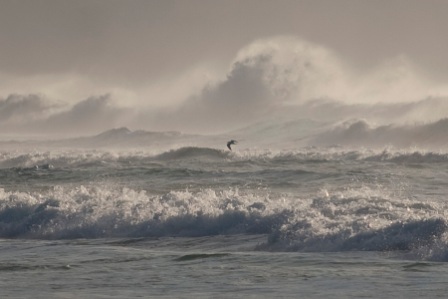
PS The pic’s for you, from Rodney.


Photograph by Rodney Weidland (used with permission)