
The Anchoress by Robyn Cadwallader

Anchoress CadwalladerIf The Anchoress by Robyn Cadwallader isn’t already on your radar, it should be.

Told in exquisite prose, it’s ostensibly the story of Sarah, a medieval nun who, at the age of 17, locks herself away from the world in a tomb-like room to pray; but it’s much more than that.

It’s a tale of grief as Sarah comes to terms with the loss of both her mother and sister in childbirth. It’s a narrative of gender politics, as she negotiates her weekly interaction with her father confessor, Ranaulf; fends off the unwanted advances of the local feudal lord, Sir Thomas; and bears witness to the scars inflicted on village women who have little power in a patriarchal, church-dominated world. It’s also a story about art and its possibility of liberation and redemption, whether it’s the art of the illuminated manuscripts that Ranaulf works on, or the art of living, of attuning to the least sensory inputs, the sounds, smells and glimpses of Sarah’s rural medieval world.

This is the standout achievement of this book, for me: the novel, while beginning as a tale of deprivation and renunciation, ends up celebrating the very embodied world Sarah was determined to reject.

…I could no longer resist the demands made by my senses. I’d had no idea that sounds and smells could separate themselves; as if unravelling a piece of cloth, day by day, thread by thread, I began to recognise them. This is mill wheel, this is cartwheels, this is dragging a sack, this is throwing a bucket of water, this is digging, scything, ploughing, and even, sometimes, whispered seed scatter. (120-21)

The Anchoress has already been extensively reviewed for the Australian Women Writers challenge, making it, I’d hazard, one of the challenge’s most popular books so far for 2015. I wouldn’t be surprised if it’s a front-runner for this year’s Stella Prize.

~

This review forms part of my contribution to the Australian Women Writers Challenge and the Aussie Author Challenge 2015. You can find other participants’ reviews via these links:

Author: Robyn Cadwallader
Title: The Anchoress
Publisher: Fourth Estate (an imprint of HarperCollins)
Year: 2015
ISBN: 978 0 7322 9921 7
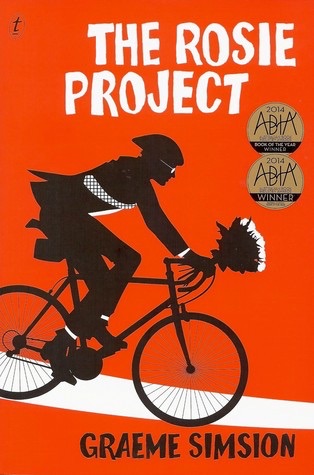
The Rosie Project by Graeme Simsion

Rosie Project SimsionWhat can you say about a book that already has over 8000 reviews on Amazon?

The overview.

Odd-ball genetics professor sets out to find a wife. He has a few stipulations: she must eat meat, must not smoke, must be punctual, and must like more than one flavour of ice cream. Along the way, he finds himself entangled with a late-arriving vegan smoker who is on a quest of her own: to find her genetic father. Much mayhem ensues.

The verdict?

The Rosie Project by Graeme Simsion is fun. It’s quirky. Reading it reminded me of enjoyable hours spent on wet Saturday afternoons as a kid watching Cary Grant in black-and-white re-runs of zany romantic comedies. (I loved Cary Grant.) I smiled, I chuckled, I laughed out loud. My mum loved it, my sister loved it; my partner took the audio book version on long walks and came back with a smile on his face.

And I also felt a little bit uncomfortable.

Simsion has written the character of the narrator, Don Tillman, with compassion, empathy and humour. But for me – and perhaps this is a reflection of the author’s skill – sometimes Tillman’s obsessiveness, gaffes and social ineptitude struck a little too close to home. While his character is never labelled with a clinical diagnosis, there are hints that Tillman’s behaviour would register somewhere along the Autism Spectrum Disorder (Asperger’s having been excluded from the DSM 5, the latest Diagnostic and Statistical Manual of Mental Disorders). On the other hand, there are suggestions, too, that Tillman is simply a flawed human being who has deliberately retreated from the world of social engagement into his “head”, or intellect. Why? It’s a defence mechanism, one which protects him from the tumultuous emotions engendered by such social encounters. In this reading, it’s not a lack of empathy he suffers, but an inability to regulate his emotions: he suffers from emotional overwhelm.

Many introverts, or anyone who has suffered social anxiety, might relate to such uncomfortability. The degree to which we can laugh with such a character, rather than at him, may vary with our ability to laugh at ourselves; this in turn might reflect the degree to which we still suffer the pain of social isolation and exclusion such defence mechanisms can create.

The Rosie Project is a very good book and deserves its many fans. It’ll make a very funny movie. It just may not be for everyone.

~

Author: Graeme Simsion
Title: The Rosie Project
Publisher: Text, Melbourne
Year: 2013
ISBN: 9781922079770

This review forms part of my Aussie Author Challenge 2015.

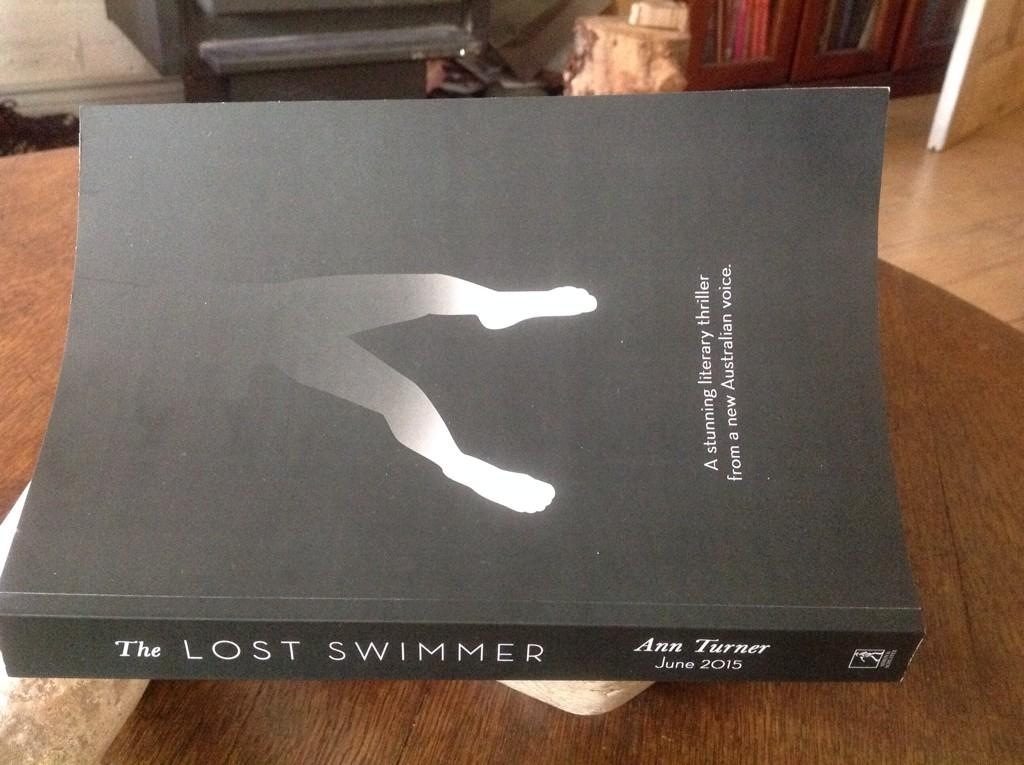
The Lost Swimmer by Ann Turner: a debut psychological thriller

imageAnn Turner’s debut novel, The Lost Swimmer, is prefaced with a quote from Heraclitus:

Everything flows and nothing abides, everything gives way and nothing stays fixed. (Heraclitus c. 535-475 BC)

Both the theme of “time” and the image of water pervade the novel.

The first-person narrator, Rebecca Wilding, is a professor of archaeology at the generically-named Coastal University in regional Victoria. She is passionate about ancient artefacts, and the layers of time that make up history. When Rebecca was little, her father drowned at sea, and she has since been wary of water. Despite this, she and her husband Stephen, another academic, have chosen to live close to an ocean beach. Together they travel to Greece and, from there, to Italy, soaking up the past, travelling by boat and holidaying by the sea.

With a first-person narrative, if you’re a thriller reader, you’re primed to suspect an unreliable narrator. Turner does a good job of laying seeds of doubt as we follow Rebecca’s story as she faces more than one mystery that threatens her happiness. These include financial problems that beset her in her role as a less-than-conscientious Head of her department; as well her suspicions about her one-time friend, Priscilla, the attractive Dean, who may or may not be deliberately undermining Rebecca’s job – or, worse, be after her husband. Then there are a plethora of secondary characters whose allegiance to Rebecca may be self-serving, who help and/or hinder her as she attempts to save her family from calamity and discover the truth. And there’s Stephen, the seemingly ideal husband and loving father, who appears to be keeping secrets.

The Lost Swimmer is billed as a “stunning literary thriller” on the front of my review copy. It made me wonder what the publicists think constitutes “literary”. Certainly there are eloquent descriptions and the story is intelligent in its approach, but there is very little in the way of figurative language; the narrative is straightforward linear realism; and there doesn’t appear to me to be layers of ideological or philosophical complexity.

Maybe I’m missing something?

The Lost Swimmer offers a good, solid story and it’s a fine achievement for a debut author who is also, according to the information from the publisher, “an award-winning screenwriter and director”. I can see it as a film.

~

This review forms part of my contribution to the Australian Women Writers 2015 Challenge and Aussie Author Challenge. A review copy was kindly supplied by the publisher.

The Lost Swimmer
Ann Turner
Simon & Schuster: Cammeray, NSW, 2015
ISBN:9781925030860