
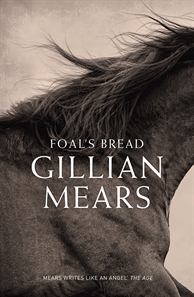
Gillian Mears’ Foal’s Bread

resized_9781742376295_224_297_FitSquareTrigger warning for survivors of childhood sexual assault.

There aren’t too many books I can honestly say have changed my life, but Gillian Mears’ Foal’s Bread is one of them.

I first came across this title in 2012 when participants of the Australian Women Writers Challenge posted their reviews. Eleven reviews appeared that year, the vast majority of which were laudatory. This was a special book, I realised. It could sneak inside your soul, break your heart, move even the most prosaic reviewer to poetry.

Opening the beautiful dust jacket with its glimpse of a galloping horse, I began to read, only soon to slam the book shut again. The initial pages are so horrifically distressing, and yet so beautifully told, I knew I’d need to be stronger to withstand the emotional onslaught.

A few weeks ago I tried again. This time, I persisted. I read about how in the early twentieth-century a young Aboriginal girl, Noah, finds herself in an intolerable situation, battles through as best she can, has children before she’s fully grown up, and marries a man who, like her, is a champion horse rider. I read of Noah’s strength as mother, farmer and farrier, as her husband Roly succumbs to a mysterious illness, the birth of her daughter Lainey who, like Noah herself, has the talent to become a champion rider. I read how the events of those first few pages haunt Noah through the years until she at last comes to terms with them.

For me the beauty of this story isn’t in the plot. It isn’t even in the language – though that is exquisite. It’s in the effect it has had on me personally. One of the facets of certain kinds of childhood sexual assault that many people don’t understand is how survivors can respond. Often, the abuser has the child’s trust; sometimes, the abuser is just about the only person ever to have shown the child kindness; sometimes the child’s own nascent sexual feelings are stimulated by the sexual violation of their boundaries, so that they don’t even recognise the abuse as abuse. They respond to it as if it were love.

Mears has depicted the complexity of this childhood response with remarkable sensitivity. Her portrayal of Noah as a survivor is done with such understanding and compassion that I find myself not only in awe at her skill, but also immensely grateful. I finished this book with a remarkable sense of freedom. For years, I have been filled with rage at my abuser. Mears reminded me of the love I’d once felt, and the reasons for that love. For some strange reason, accepting this reality, opened up a space where, it seems, forgiveness may be possible. We are all capable of being abusers of one kind or another, Mears suggests; “hurt people hurt people”. It’s a remarkable gift for a writer to convey that reality with such a deep sense of compassion.

As its publisher’s page attests, Foal’s Bread has been nominated for and won an outstanding number of awards:

Short-listed, Adelaide Festival Award for Literature, Fiction, 2014
Winner, Prime Minister’s Literary Award for Fiction, 2012
Winner, ALS Gold Medal, 2012
Winner, 60th Annual Book Design Awards, Best Designed Literary Fiction, 2012
Winner, The Age Book of the Year Award Fiction, 2012
Winner, Victorian Premier’s Literary Award for Fiction, 2012
Winner, Colin Roderick Award, 2012
Short-listed, NSW Premier’s Literary Awards, Christina Stead Prize for Fiction, 2013
Short-listed, Indie Awards, Fiction prize, 2012
Short-listed, Barbara Jefferis Award, 2012
Short-listed, Miles Franklin Literary Award, 2012
Short-listed, Nita B. Kibble Award, 2012
Short-listed, Australian Book Industry Awards Book of the Year, 2012
Short-listed, West Australian Premier’s Book Award, 2012

Having finally read it, I now know why.

~

This review forms part of my contribution to the 2014 Australian Women Writers Challenge and Aussie Author Challenge.

Author: Gillian Mears
Title: Foal’s Bread
ISBN: 9781742376295
Australian Pub.: November 2011
Publisher: Allen and Unwin
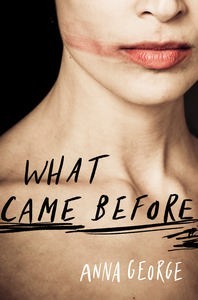
What Came Before by Anna George

‘My name is David James Forrester. I’m a solicitor. Tonight, at 6.10, I killed my wife. This is my statement.’

What Came Before Anna GeorgeThis is the dramatic opening of What Came Before, the brilliant psychological thriller debut by Melbourne writer Anna George. The rest of the novel reveals how the murder came to happen.

We see Forrester’s wife, Elle, before her death. She’s working in the film industry, having left a career in law. With one successful film behind her, she is busy directing another. This latest is about “limerance”, the early stages of romantic love.

Elle encounters Forrester, a high-powered lawyer she remembers from her legal days. She is immediately attracted. By what? His looks, the interest in art they share. Certainly not his sociability, as he proves indifferent to her friends. As they begin their relationship, she experiences an almost delusional infatuation – the “limerance” of her film’s title – which leads her to ignore warning signs that the relationship isn’t healthy.

Unknown to Elle, Forrester’s marriage has disintegrated, leaving him angry at his ex and missing his young step-daughter. He’s also a frustrated artist, a control freak and a very unhappy man.

Throughout the narrative, point of view switches from Forrester, as he dictates his “witness statement” and consults a retired QC for legal counsel, to Elle, as she lies in death – or the imagined transition that follows death. This dual narration, swapping tenses between past and present, makes for compelling reading as we are led inexorably to the inciting incident, Elle’s death.

One question often asked about women in abusive relationships is, “Why did they stay?” What Came Before answers this question. “Limerance” makes us idolise our partners, letting us see only what we want to see; tells us to forgive their failings, to look only at their good qualities; blinds us to the escalating “cycle of violence”. The longer we stay, the more we believe they are essentially “good”, that their character defects are a result of damage done in childhood, that we are connected to them in some essential way, the more dangerous the relationship becomes.

Anna George has drawn on her own experience* of “emotional abuse” to create the relationship between Forrester and Elle, and her experience shows. For me, though not for all reviewers, she manages to make Elle sympathetic, despite her irrational choices. George also conveys what it’s like to be the man who resorts to violence, his self-justifications, his belief that he was provoked. If I had one criticism of the characterisation of What Came Before, it’s of the moment when Forrester makes a transition from “emotional abuser” to “physical abuser”. For me, the transition appeared too abrupt. Thinking about his behaviour in terms of “narcissistic rage”, however, I can make more sense of it. Far from being egoistic, Narcissists lack the internal resilience that would allow a healthier psyche to take criticism, perceived rejection or opposition. In this light, George gets the psychology for Forrester right; the result is believable and frightening.

The publishers have described this novel as “literary”, and in the vein of Gillian Flynn’s Gone Girl. What Came Before is clever, like Flynn’s novel, but the cleverness isn’t at the expense of its emotional truth. The characters come across as real, their motivations consistent, their delusions understandable. Does this make it “literary”? It’s a well-written psychological thriller which deserves to become a best-seller.

Anna George has been added to my already impressive list of “must read” Australian female crime and suspense authors. I can’t wait for her next book.

* Anna George mentioned this in an interview with Carol at Reading, Writing and Riesling blog, here.

~

This review forms part of my contribution to the Australian Women Writers Challenge and Aussie Author Challenge. A review copy was kindly supplied to me by the publishers via Netgalley. What Came Before has already been reviewed for the AWW challenge by:

Author: Anna George
Title: What Came Before
Published:25/06/2014
ISBN-13:9780670077731
ISBN-10:0670077739
Publisher:Penguin Aus
Imprint:Viking