
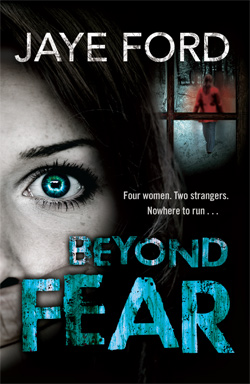
Beyond Fear – edge of the seat thriller

Beyond Fear, by Australian author Jaye Ford, is a book that grabbed me from page 1 and never let me go. Although I’d read this story in manuscript, once I had the book in hand, out went the cooking and the housework. Luckily I had time off work. It was even more thrilling to read it in one go. Everyone I’ve spoken to who has read it has literally not been able to put it down.

According to the Jaye, the story was inspired by the real-life stabbing of a teenage girl who witnessed her best friend’s rape and murder before being left for dead. The story’s premise begins with the scenario – how would such a woman react years later when confronted by another potentially violent situation? Would she cave or cope?

Like Jaye, I’m a dedicated fan of psychological thrillers like those by writing duo Nicci French, so I loved the fast pace and all-too-human characters of this page-turning novel. An incredible debut for first-time author, Jaye Ford – hopefully it’s the beginnings of many great reads to come.

Jaye’s second book, Scared Yet?, is due out in March 2012.
Creative Commons Licence
Review of Beyond Fear by Jaye Ford by Elizabeth Lhuede is licensed under a Creative Commons Attribution-NoDerivs 3.0 Unported License.
Based on a work at elizabethlhuede.wordpress.com.
Permissions beyond the scope of this license may be available at http://www.elizabethlhuede.com.

Marching Powder, Rusty Young – true crime review

I read Marching Powder: A True Story of Friendship, Cocaine, and South America’s Strangest Jail over one wild, windy weekend, only getting up off the couch to eat, say hi to my long-suffering partner and sleep. Then I checked out some reviews.

Strange, but I agreed with both the 5-star and the 1-star comments. It’s a fascinating, page-turning story, told in a simple, easy-to-read style. It has touches of surreal comic brilliance, as it tells of the narrator Thomas’s survival through incredible hardships and injustices of his 4-year sentence for drug-trafficking in a Bolivian jail. The first-person narration allows Thomas to gloss over the enormity of his crimes, not only of the original trafficking offence, but his subsequent drug-use and drug-dealing inside the prison, his bribery of prison and court officials, and his bashing of other inmates (described by horrified visitors as torture).

Whereas some readers have seen Thomas’s crimes and apparent lack of remorse as a flaw in the story, I see it as a strength of the book’s real author, Rusty Young, who allows “Thomas” to speak for himself, to spin his yarns of prison life in a way that is engaging, but not totally believable – Thomas is the archetypal unreliable narrator and readers can judge him for themselves.

Although I missed some contextualising by the “Rusty” character at the end – some hint that we’re not meant to swallow Thomas’s story uncritically – it wasn’t hard to read between the lines. The overall impression I got is that Thomas the person shares the personality profile of many successful criminals: a sociopath – a narcissistic manipulator who charms people and gets them onside, but always manages to see to his own needs; someone who ultimately has very little moral sense of culpability of responsibility for the hideous crimes he’s perpetrated against others.

Far from being a weakness, I see this narrative choice as one of the story’s strengths. But because of Thomas’s unreliability, I’m not so sure the book should be characterised as “non-fiction” or “biography”.

Creative Commons Licence
Review of Marching Powder by Rusty Young by Elizabeth Lhuede is licensed under a Creative Commons Attribution-NoDerivs 3.0 Unported License.
Based on a work at elizabethlhuede.wordpress.com.
Permissions beyond the scope of this license may be available at http://www.elizabethlhuede.com.

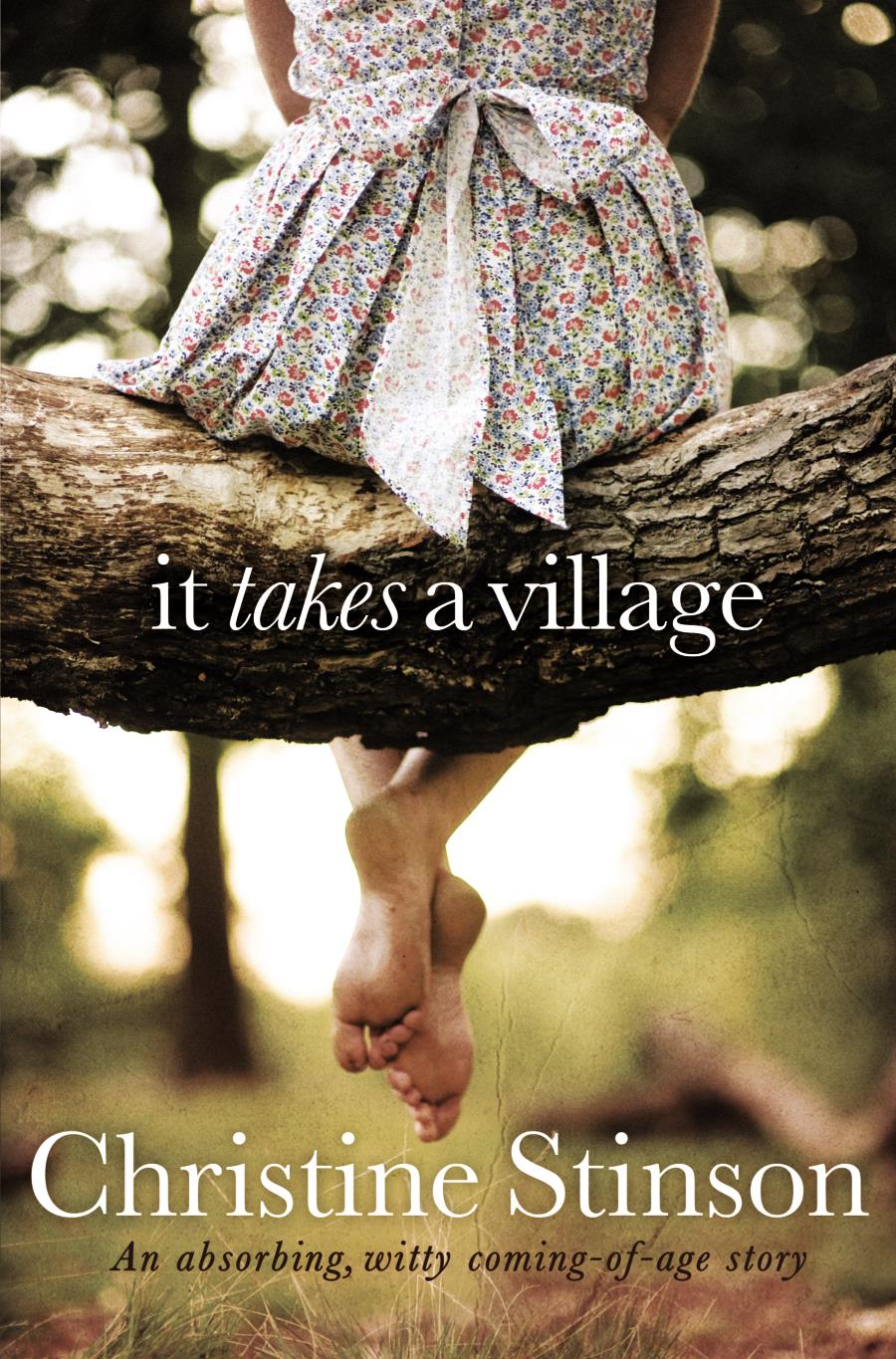
Christine Stinson, It Takes a Village – An Australian childhood

Australian author Christine Stinson’s first novel was the marvellously witty and engaging, Getting Even with Fran. That story celebrates the complexity of life-long friendships, centering around a thirty-year Catholic girl’s school reunion. After such a debut, Stinson’s second novel, It Takes a Village, comes as a surprise.

Told from the point of view of a young orphaned girl being brought up by her shell-shocked grandfather, It Takes a Village doesn’t have the biting humour of Getting Even with Fran. Rather, it weaves a gentle spell around the lives of the various characters who populate a poor suburb in Sydney in the 1950s and early 60s.

In this fictional memoir, Stinson deftly creates a portrait of an Australian way of life long gone. With strict morals and, at times, narrow-minded attitudes, this life also created a sense of  compassion and community that contemporary suburban life rarely offers. Having read the story in manuscript, as well as the finished novel, I kept hearing echoes of the sayings and expressions of people from my own Australian childhood, those ancient great-aunts and their companions who have long since passed away.

Although It Takes a Village touches on some serious social questions, including the aftermath of the deployment of United States army personnel in war-time Sydney, it doesn’t attempt to provide serious social commentary. Instead it achieves a moving as well as feel-good atmosphere which reminded me of the novels of Maeve Binchey.

Given that the second novel was such a contrast to the first, I’ve been fascinated to watch Stinson approach the writing of her third, yet to be published, novel Epiphany (working title). Set in the Blue Mountains, Epiphany revisits the “group of friends” theme, and again conveys the complexity of relationships among contemporary Australian women, this time with the added international flavour of having one of the main characters a leading conductor. The story builds on a deeply moving emotional dilemma which touches many Australian women in their late thirties-early forties juggling motherhood and career, and promises to be ranked among the best contemporary mainstream Australian women’s fiction when it appears.

(This review appeared in Amazon in July 2011 and has been revised)

Creative Commons Licence
Review of It Takes a Village by Christine Stinson by Elizabeth Lhuede is licensed under a Creative Commons Attribution 3.0 Unported License.
Based on a work at elizabethlhuede.wordpress.com.
Permissions beyond the scope of this license may be available at http://www.elizabethlhuede.com.