Satire or sensationalism? Caroline Overington’s No Place Like Home

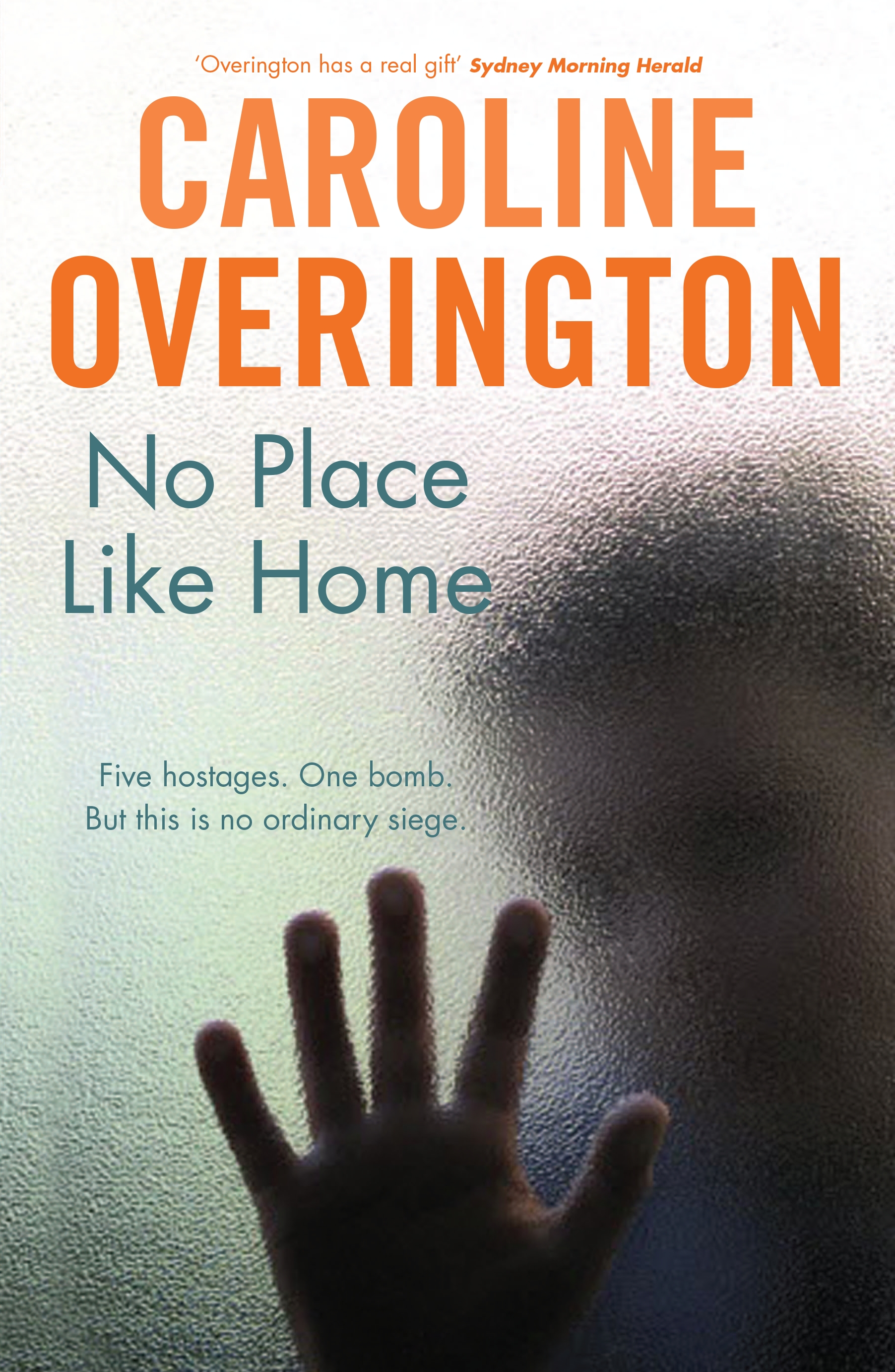
No Place Like Home Cover ImageEver get the feeling that the book you’ve just finished reading and the one by the same title being lauded in reviews isn’t the same book?

That’s how I felt after finishing Caroline Overington’s latest, No Place Like Home.

Overington’s previous book, Sisters of Mercy (reviewed here), had me fuming, so I wasn’t surprised to find No Place Like Home equally provocative. What did surprise me, though, was how different from mine were other reviewers’ reactions to the novel. Where I’d felt angry, by contrast, the ending left more than one other reviewer feeling sad. Whereas I found the narrator shallow and deeply problematic ethically, another thought him “likeable and moderate in his thinking”. Where I saw the majority of the characters as caricatures, others found these figures believable. Where one reviewer regarded the novel to have been written with compassion, I saw, through the eyes of a deeply flawed narrator, a disgust and contempt for the flaws of other human beings.

Were we reading the same book?

No Place Like Home was published this month by Bantam Australia, an imprint of Random House. In her 30 second pitch for The Book Circle, Overington describes the book as “unashamedly a thriller”. Its premise is simple:

A young man walks into a shopping centre. He’s wearing a hoodie zipped up to his neck. He starts to run, security guards start to chase him, and he gets into a shop, where he’s locked in. The idea for the reader is: Who is he? How will he get out? And will the people stuck in the shop with him also get out alive?

The narrator is a former police chaplain who recounts the events of that day. No reason is given as to why this ex-priest elects to tell all – and to betray, as he does, the confidences of people whom he was paid to counsel after their ordeal. Seemingly to satisfy his own curiosity and exploit the sensationalism surrounding the day’s events, he exposes to public gaze the private foibles and flaws of those involved, their hypocrisies, narcissism and, at times, downright stupidity.

The young man at the centre of the “hostage crisis”, Ali Khan/Nudie, is an Australian citizen. As an immigrant and one-time refugee from Tanzania, he has been let down by his community, his rescuer, the Department of Immigration, his landlady, African community outreach workers, and now police hostage negotiators and bystanders. Few are exempt from the priest’s scathing criticism. There’s Marj, who took in Nudie only to reject him, an urban Greens-voting do-gooder; she was disappointed that “her refugee” wasn’t tall and black, someone “that she could parade around, showing how tolerant she was”, but instead was grey in skin colour, possibly Albino, an outcast from his own community. The priest opines:

I got the feeling that Marj got involved because she’s always got to be involved in something, and if it’s on the Left, it’s for her.”

There’s the bystander/victim held “hostage” by Nudie, the real estate agent from Melbourne, with his shallow, spendthrift wife, and attention-grabbing stripper girlfriend. There’s the African community worker who ran from Nudie, screaming about “evil”, instead of helping him. There’s the priest-narrator himself, lacking in self-awareness (“Everyone’s entitled to their opinion. I tend not to give mine”), standing in judgement over others while ignorantly referring to refugee boat arrivals as “illegal” and “queue-jumping”.

When I asked via Twitter who else was reading No Place Like Home, one tweep answered, “I would rather eat my hands than read another of her novels. Overblown, sensationalist tripe.”

That got me thinking.

I like reading Overington’s books, even while I suspect her politics and mine are vastly different. I like that her work provokes and outrages me, that she brings up issues of morality, ethics and social justice in her writing, and that she takes vicious stabs at “political correctness”. I don’t find her writing realistic, heartwarming or even insightful, but does it have to be? Perhaps there’s a different way of reading it.

Is No Place Like Home satire? Is that how it should be read?

As an undergraduate, I read Candide, the poems of Alexander Pope, Gulliver’s Travels, Huckleberry Finn, The Trial and 1984; more recently, I was provoked by Gillian Flynn’s Gone Girl (reviewed here); all of these could be described as satire. It’s not my preferred genre and I can’t say I really have a handle on it, but I think Overington’s work might fit this category. Wikipedia says of the Roman poet Juvenal, one of the first proponents of satire: “In a tone and manner ranging from irony to apparent rage, Juvenal criticizes the actions and beliefs of many of his contemporaries, providing insight more into value systems and questions of morality and less into the realities of Roman life.” (source) Australian satirist David Foster has been described by Susan Lever in the following terms:

[H]is writing sets itself deliberately against the favourite beliefs of the educated readers who are most likely to read it. His work is opinionated, misanthropic… Foster is a novelist of ideas rather than character; readers cannot slip into sympathetic identification with his characters because they exist to express ideas rather than individual psychologies. (source)

It’s my view that Overington’s work can also be read in these terms and, as satire – a genre traditionally associated with male writers and deemed “unladylike” – it’s worth reading.

In British Women Writing Satirical Novels in the Romantic Period, Lisa M Wilson notes:

[R]eviewers of the period seem to have been as likely to praise or to condemn a satirical novel based on their opinion of the author’s politics as of the author’s gender.

I’d prefer not to do that.

No Place Like Home is compelling reading. The reader wants to know what happens next, and along the way Overington ranges over several of the most important questions facing Australia today. What kind of country do we want to be? What kind of generation do we want to be remembered as? A generation which has allowed dog-whistle politics to whip up feelings of invasion and xenophobia, instead of tolerance and compassion? People who fail to act to restrain greenhouse gas emissions, only to have our government’s policy of “stop the boats” overwhelmed by a tidal flood of global human migration when sea levels begin to flood low-lying countries? It’s exciting to see such issues being addressed in popular fiction.

One of the bonuses of reading and reviewing for the Australian Women Writers Challenge* has been discovering the diversity of political opinions among our talented contemporary women writers. I’m grateful for authors who can tackle big questions from all sides of politics – even if I don’t like the values they or their characters appear to espouse. Anger, the dominant emotion I see being conveyed and evoked by Overington’s writing, can be a powerful tool for change. Harnessed in a compelling narrative in simple-to-read language, it may reach a wide audience of people who don’t normally read. (“Not everyone knows what an inquest is,” says Overington’s priest-narrator, before going on to explain.) My hope is that this book will inspire its readers to think about the values they hold and why, not simply reinforce their prejudices. My fear is that some readers may not be able to distinguish between Overington and her ignorant narrator. Rather than criticise Overington’s work for its simplifications and the shallowness of its characters, however, I’d prefer to see it in terms of its strengths. No Place Like Home is thought-provoking and challenging, and a page-turning read.

* If you’re interested in finding out more about the Australian Women Writers Challenge, please read this recent article published by if:book Australia.

~

This review counts towards my contribution to the Australian Women Writers Challenge (AWW) and the Aussie Author Challenge

Author: Caroline Overington
Title: No Place Like Home
ISBN: 9781742758015
Published: 01/10/2013
Imprint: Bantam Australia
Review copy (ebook) kindly supplied by Random House Australia via Netgalley.

The Eye of the Crocodile by Val Plumwood

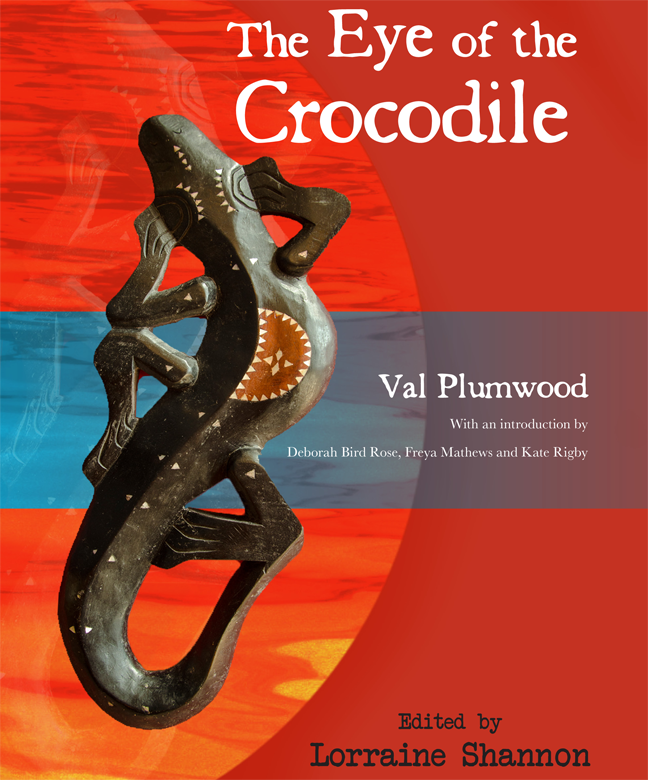
eye-of-crocodile-plumwoodOne of the best things to come out of the Australian Women Writers challenge for me has been exposure to books that I might never have discovered on my own. Recently ANU E Press joined the challenge, tweeting links to (free) e-books by Australian women. Val Plumwood’s The Eye of the Crocodile, edited by Lorraine Shannon, is one such book.

Part memoir, part collection of philosophical and eco-feminist essays, The Eye of the Crocodile contains Plumwood’s last pieces of writing – she was working on the draft when she died in 2008. According to authors of the book’s introduction:

Val Plumwood was one [of] the great philosophers, activists, feminists, teachers, and everyday naturalists of the late 20th and early 21st centuries… Her stature as a thinker of power and influence was reflected in the fact that she was included in the 2001 book 50 Key Thinkers on the Environment [edited by Joy Palmer, David Cooper and Peter Blaze Corcoran]… She was not only an influential environmental thinker, whose book Feminism and the mastery of nature has become a classic of environmental philosophy; she was also a women who fearlessly lived life on her own deeply considered terms, often in opposition to prevailing norms. (1)

The first section, which gives the book its title, contains an account of Plumwood’s near-death experience when, during a trip to Kakadu in 1985, she became prey to a large crocodile which death rolled her three times before releasing her. The remaining sections bear out the impact of this experience on her life and thinking. The collection includes a discussion of the movie Babe and a moving account of her friendship with – and grief over the death of – a wild wombat named Birubi. The third, most philosophical, section contains essays on radical vegetarianism and “a food-based approach to death”.

The coupling together of “pieces” rather than a unified work means the writing styles of The Eye of the Crocodile are varied. Passages of beauty and emotional power sit alongside some heavy-weight philosophical pondering. Plumwood admired creative writers for their ability to convey new ideas to a wide audience, and in the memoir section it is clearly a mainstream audience which she hoped to reach. Had she lived, this section would, I imagine, have made up the bulk of the book, with some of its more florid stylistic touches toned down by editors. As a short, incomplete work, however, The Eye of the Crocodile still has much of value to offer the reader.

The collection begins with Plumwood’s reflections on the fateful canoeing trip she made to the remote area of Kakadu when she encountered the crocodile. Her account gives an indication both of her personality and her writing style:

I suppose I have always been the sort of person who ‘goes too far’. I certainly went much too far that torrential wet season day in February 1985 when I paddled my little red canoe to the point where the East Alligator River surges out of the Stone Country of the Arnhem Land Plateau. It was the wrong place to be on the first day of the monsoon, when Lightning Man throws the rainbow across the sky and heavy rains began to lash the land. (10)

After surviving the crocodile attack, injured and alone, Plumwood crawled for help and was found by a park ranger. Reflecting on her experience at various points throughout the essays, Plumwood reveals how, by facing her own mortality and insignificance, she was inspired to question the dualistic thinking that underpinned both her reaction to the event as well as much of Western philosophy. This thinking sees humanity as an exception to nature, above and beyond it, instead of a part of it. It sees humans as separate from animals because we have “souls” and can reason, and this enables us to commodify animals as a food source, taking little care of the lives of the creatures whose flesh we eat. At the same time, we respond with rage, disbelief and a desire for retribution when predator animals prey on us, threatening the illusion of our supremacy and safe autonomy. In this, we deny our part in the food chain or “foodiness”, as Plumwood calls it.

In between dipping into Plumwood’s collection, I also listened to the latest ABC RN podcast of All in the Mind:Animal Minds”. In this program, author Virginia Morell discusses a conversation she had with Jane Goodall over Goodall’s witnessing in the 1980s of the “deceptive” behaviour of a chimpanzee. What was clear in Morell’s account was that while Goodall attributed to the chimp a sense of “intention” – if not downright personality – she was also deeply wary of declaring such beliefs openly, for fear of being labelled “anthropomorphic” by a scientific community which, back in the 1980s, still thought of animals as little more than stimulus-response machines.

In her discussions of both the crocodile and her wild wombat “friend”, Plumwood seeks to avoid being anthropomorphic by depicting these wild animals as “radically other”, as seeming to share in aspects of human-like cognitive functioning, but also experiencing consciousness in their own terms, in their own environmental contexts and with their own needs as paramount. While Plumwood avoids sentimentalising animals, there are elements in her attitude to animals and the land that strike me as romantic, particularly in her evocation of Thoreau and in passages which borrow from motifs and themes of indigenous cultures. By contrast, there is little that is romantic in her critique of central tenets of Classical and modern philosophical thinking.

While Plumwood critiques Platonic idealist thinking and Christian monotheistic views of “heaven”, she also identifies similar dualistic thinking among those whose views, at first glance, would appear to be in radical opposition to the views of these other two groups: animal defence activists and material atheists. This is the area of her discussion which I found most compelling, and it helped me to clarify some of my own thoughts about how we can honour and respect animals, while at the same time deriving the nourishment we need for survival in an ecologically aware manner.

According to Plumwood, “Ontological Vegans” would deny humans the right to eat meat (often adopting a “holier-than-thou” attitude), by extending to (some) animals a separate, soul-like consciousness. In this, their stance is not dissimilar to the theists who claim humans are set apart from (other) animals: it is because of this “separateness” from lower-order life-forms that animal flesh becomes inviolable. (And the question becomes, at which animal/level of consciousness do we draw the line?) Embedded in this position, Plumwood claims, is the same Cartesian separation of mind/body that has led humanity to the utilitarian use of the environment which now threatens the planet.

Materialist atheists are also bound by this dualistic thinking. Those who see death as the “End of the Story”, she says, valorise individual, separate human consciousness as if it were the pinnacle of existence. Yet their so-called “bravery” in the face of a perceived nothingness after death is merely a factor of their deep sense of loss – if not nostalgia – for the “heavenism” of those who believe in an after-death eternal life for the spirit. Both Ontological Vegans and modernist-atheists fail to see the inter-connectedness of the human to ongoing life narratives, narratives which would allow human bodies, in death, to nourish and replenish the earth. Such non-dualistic thinking Plumwood refers to as “Ecological Animalism”.

Plumwood’s final piece, “Tasteless: Towards a food-based approach to death”, reveals how her non-dualistic view has been informed by her understanding of Australian indigenous cultures. In an Ecological Animalist framework, barriers between so-called materialist and more “spiritual” approaches to life are broken down:

By understanding life as circulation, as a gift from a community of ancestors, we can see death as recycling, a flowing on into an ecological and ancestral community of origins. In place of the Western war of life against death whose battleground has been variously the spirit-identified afterlife and the reduced, medicalised material life, the Indigenous imaginary sees death as part of life, partly through narrative, and partly because death is a return to the (highly narrativised) land that nurtures life. (92)

I learned today that Plumwood helped to launch feminist Susan Hawthorne’s book Wild Politics at Gleebooks in Sydney in 2002, and that she lived and died not so very far away, at Braidwood, on the Southern Highlands, between Sydney and Canberra. She was old enough to be my mother, having had a daughter (who later died) the same year as I was born. Yet, while I can name several Australian sportswomen of that era, I’d never heard of Plumwood or her ideas till now. An Australian woman named internationally as one of “fifty key thinkers on the environment”, yet so little recognised.

How and why is that so?

~

Author: Val Plumwood
Title: The Eye of the Crocodile
Edited by Lorraine Shannon
ISBN 9781922144171 (Online)
Published November 2012
Citation url: http://epress.anu.edu.au?p=208511

Honey Brown’s Dark Horse

honey-brown-dark-horseYesterday Sydney was hit by a storm from the south east. Rain pounded on the tin roof, gutters overflowed, the temperature plummeted. In my inbox came an email from NetGalley stating that Penguin Australia had approved my request to review Honey Brown’s latest novel, Dark Horse, out this week. I’d read Brown’s Red Queen last year and have heard lots of good things about The Good Daughter, so I couldn’t resist downloading the ebook and peeking at the first page.

That was it for the rest of the day. I was hooked.

If you’re a fan of Jaye Ford’s Beyond Fear, Dawn Barker’s Fractured and Gillian Flynn’s Gone Girl, you’re going to love Dark Horse. It’s quite a ride. I would have read it in one sitting, if I hadn’t had to sleep. I curled up in front of a glowing slow combustion stove and, while the weather went crazy outside, was swept into the drama. Brown has a style that I love: it’s immediate, the descriptions are fresh, the action is urgent. I could almost feel the Victorian alpine hills crowding in, felt every bump and jerk of the heroine’s ride up the mountain on her endurance-trained horse, held my breath at the enormity of what she faced going up, when she reached the summit and going down again. It’s that kind of book: suspenseful, urgent, adrenaline-pumping.

And it’s clever. I’m used to twists in suspense fiction and I can usually read the signs. This book proved no exception, except I realised I was being played. Every time I anticipated the narrative, there was an unexpected payoff; each time I thought something was unlikely or stretched credulity, it proved well motivated or explained.

It was the perfect read for a rainy day, better than a movie. (Far better than its trailer.)

Do I go away with things to think about? I’m not sure. It ranges over what, to me, is very interesting territory: the extremes of human emotions and behaviour; infidelity; depression/mental illness; the breakdown of relationships; childhood trauma and its effects on the family. It belongs to the “family drama with crime” genre that writers like Wendy James and Caroline Overington are so successfully carving a niche in. It’s edgy. It’s sexy, too. But I’m not sure the degree to which it touched me emotionally and intellectually, or simply thrilled me. (To explore this further would necessitate spoilers.)

What it did do is confirm for me that Australian women psychological suspense writers are right up there among the best in the genre. I’m also glad I have two more Honey Brown books, The Good Daughter and After the Darkness, tucked away for another rainy day.

~

This review counts towards the Australian Women Writers Challenge. It has been reviewed elsewhere for the challenge by Simone at Great Aussie Reads and by Brenda in Goodreads.