 I have a confession.
Despite calling this blog “Devoted Eclectic”, I’m not very eclectic in my reading tastes. My interests? They’re eclectic. I’m fascinated by science, politics, religion, history, philosophy, psychology and education. But my reading? Not so much, judging by my selections for the Australian Women Writers 2012 Challenge – even though I set out to be inclusive.
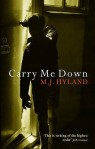
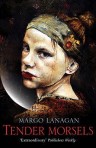
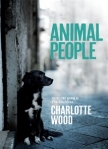
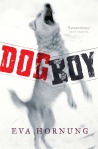 The truth is, I love drama. I love intense, heartbreaking stories like M J Hyland’s Carry Me Down. I love inventive – even dense – language that’s been honed and crafted till it’s so sharp it cuts the reader, like Margo Lanagan’s Sea Hearts. Or crisp prose that sweeps me into the narrative so effectively it’s like watching a movie, as in Wendy James’ The Mistake, Emily Maguire’s Fishing for Tigers and P M Newton’s The Old School. I also like sentimentality; by that, I mean stories that set out to manipulate the reader’s emotions with powerful fictional scenarios that yank your heart out, leaving you gasping rather than crying – or sometimes both, as in Eva Hornung’s Dog Boy, Margo Lanagan’s Tender Morsels, Kirsty Eagar’s Raw Blue, Virginia Lloyd’s Young Widow’s Book of Home Improvement and Charlotte Wood’s Animal People. All of these books are devastating in some way; I enjoy being devastated.
 That’s what, for me, makes a great read.
Some genres devastate me more than others. Suspense and thrillers, yes, and family drama with elements of crime. Some historical fiction; some literary fiction; some fantasy. Science fiction? Not so much. Romance and mainstream commercial fiction? Not really. I find much of it readable and enjoyable, but it doesn’t stay with me. There are good psychological reasons why this is so, to do with heightened emotions helping to lay down memory. It’s probably also connected with my traumatic childhood: I crave stories that take me to the edges of human experience and force me to confront what it means to be human, my values, what I aspire to, what I run away from, what I fear inside myself and others. I crave, too, fine poetic writing, the kind that makes me despair of my own ability to write.
No surprises then when I look over my year of reading books by Australian women in 2012 – a year when I thought I was selecting widely – and find the genres I’ve gravitated towards. When it came to reviewing, though, I didn’t manage to review all the ones that really touched me.
 This is my tally of reading for the Australian Women Writers 2012 challenge, with links to the ones I’ve reviewed (17/48).
Crime, mystery, detective, suspense, thriller, family drama with crime:
- Erskine, Y A. The Betrayal – crime*
- Erskine, Y A. The Brotherhood – contemporary crime
- Ford, Jaye. Scared Yet?
- Foster, Sara. Beneath the Shadows – suspense
- Gentill, Sulari. A Few Right Thinking Men – historical crime
- Howell, Katherine. Cold Justice
- Howell, Katherine. The Darkest Hour
- Hyland, M J. Carry Me Down – historical fiction/thriller
- James, Rebecca. Beautiful Malice – contemporary crime
- James, Wendy, Where Have You Been? – contemporary crime
- James, Wendy. The Mistake – contemporary crime
- Johnson, Sylvia. Watch Out For Me – contemporary
- Jordan, Toni. Fall Girl – humour, mystery
- Newton, P M. The Old School – literary detective*
- Overington, Caroline. Ghost Child – contemporary crime
- Overington, Caroline. I Came to Say Goodbye – contemporary crime
- Overington, Caroline. Sisters of Mercy – crime thriller suspense*
- Savage, Angela. The Half-Child – detective literary – detective
- Watson, Nicole. The Boundary – contemporary crime
Literary contemporary fiction:
- Jones, Gail. Dreams of Speaking
- Jones, Gail. Sorry
- Joosten, Melanie. Berlin Syndrome
- Leonhardt, Lynne. Finding Jasper
- Maguire, Emily. Fishing For Tigers
- Parrett, Favel. Past the Shallows
- Smith, Annabel. Whisky Charlie Foxtrot
- Tranter, Kirsten. A Common Loss
- Wood, Charlotte. Animal People
Mainstream commercial fiction – contemporary and historical:
- Brooks, Geraldine. Caleb’s Crossing – historical, romantic
- Byrski, Liz. In the Company of Strangers – contemporary
- Ham, Rosalie. Summer at Mount Hope – historical
- Heidke, Lisa. Stella Makes Good – contemporary, Chick Lit
- Heiss, Anita. Avoiding Mr Right – contemporary, humour
- Morton, Kate. The Secret Keeper – contemporary/historical
Young Adult:
- Au, Jessica. Cargo – contemporary YA
- Crowley, Cath. Graffiti Moon – contemporary YA
- Eagar, Kirsty. Raw Blue – contemporary YA
- Gardiner, Kelly. Act of Faith – historical YA
- Hornung, Eva. Dog Boy – dystopian speculative YA
Speculative, fantasy
- Forsyth, Kate. Bitter Greens – fantasy* historical
- Lanagan, Margo. Sea Hearts – speculative historical
- Lanagan, Margo. Tender Morsels – speculative, fantasy
Speculative Science Fiction
- Brown, Honey. Red Queen – dystopian speculative, thriller
- Corbett, Claire. When We Have Wings – dystopian speculative
- Mundell, Meg. Black Glass – dystopian speculative/science fiction
- Westwood, Kim. Courier’s New Bicycle – dystopian speculative/science fiction
Memoir
- Lloyd, Virginia. The Young Widow’s Book of Home Improvement
Children’s
- Roberts, Tansy Rayner. Sea Castle
I didn’t make my revised goal of 50 books, and I don’t think I’ll get anywhere near this number in 2013. Instead, I’m looking forward to getting back into my own writing, and of narrowing the focus of my reading, in the hope of discovering more devastating books by Australian women.

 I felt uneasy through a fair bit of this book. At first I wasn’t sure whether I was being played with, but then I realised the story line is pretty straight forward. It ranges over a number of different points of view and deftly incorporates a variety of styles. There’s the first-person narrative of the brittle main character Ella; the stage-managed diary entries of her narcissistic younger half-sister, Jess; the folksy-jolly emails of her step-brother Charlie; and the heartfelt letters of her estranged husband Aidan.
 Devoted Eclectic