
More meditation than murder: Sorry by Gail Jones

sorry-jones2Sorry is an unsatisfying book.

After seeing Kevin Rennie’s glowing review earlier this year, I had expectations. I loved Jones’ Dreams of Speaking, the first book I finished for 2012. I’ve heard great things about Five Bells. Sixty Lights has been working its way up my “to be read” pile. Then I was caught at my mum’s house last week without a book to read and saw Sorry on her bookshelf. I’d picked it up at a Lifeline fair and passed it on to her months ago. It seemed the perfect bookend for the year.

Yet I found myself struggling to concentrate and – I admit it – counting the pages to the chapter end.

It’s not the density of the language, though Rennie is right to point out that the book is peppered with old-fashioned phrases. I love Jones’ prose. I relish in her love of words, her passion for books and Shakespeare. The problem was the structure.

If I’d kept in mind as I read that it is “a bit of a murder mystery”, as Rennie calls it, I might’ve been more engaged. But I found little of the sense of urgency or curiosity I associate with that genre. Jones invites her readers into her tale with a graphic, disturbing opening only to abandon them, to let the narrative drift. It drifts across the Northern Territory in the war years of the early 1940s, across the lives of a displaced English couple and their run-wild child, the slow disappointments and cruelty of the anthropologist father and disintegration of his Shakespeare-obsessed wife, the child’s friendships with a succession of Aboriginal companions and a deaf-mute son of a neighbour. The novel gathers momentum with the Japanese bombing of Broome and comes to a denouement with the revelations of the truth behind the novel’s opening.

It is a good – perhaps even great – book. A book, Rennie says, that every Australian should read. But I was left… unsatisfied. The book is “about” things, important and interesting issues. It’s a meditation on language, reading and communication, on intimacy, race relations, prejudice, failure and forgiveness. With such noble themes, it should have moved me more. But what it’s not is the kind of tale I really like, a book that makes me feel intensely, that sweeps me away on a flood of emotion, as well as thought and imagination, and leaves me stranded and exhausted – and changed – at the end.
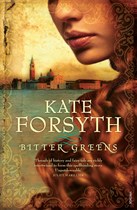
Bitter Greens by Kate Forsyth

Ever since posting Margo Lanagan’s piece for the Australian Women Writers challenge, I’ve been looking forward to reading Kate Forsyth’s novel, Bitter Greens.

Forsyth isn’t a new author for me – year ago, I read and enjoyed the Witches of Eileanan, a series aimed at young adults – but Bitter Greens is the first adult novel of hers I’ve read. The novel ranges over two centuries, combines history and fairytale, and creates portraits of three different women: a real historical character, novelist Charlotte-Rose de Caumont de la Force, the girl fabled as “Rapunzel”, and her imagined captor and “witch”, the Venetian courtesan “Selena Leonelli”. It’s more ambitious than any of Forsyth’s Fantasy series, especially in its self-reflexive quality. Central to the tale are themes concerning the art of narrative, and the genesis and profession of story-telling. This ambitious structure is both a strength and a weakness.

While less than a third the way in I was spell-bound, the beginning of the novel didn’t quite sweep me away as I’d hoped. After a page introducing the chief story-teller, Charlotte-Rose, as a child, the narrative jumps to show her as a grown woman. This rapid shift didn’t allow me to get to know Charlotte-Rose, to care about her and know what she wants out of life. I felt little sense of the tragic irony I guessed Forsyth was trying to create, the sense that here is a great character destined to fall. As the book progressed, however, I enjoyed Charlotte-Rose more and more. Forsyth portrays her as a headstrong, sexually active woman, with enough self-interest, stubbornness and resourcefulness to pursue her career in defiance of the mores and life-threatening risks of her time.

I felt more immediate empathy for the other point of view characters, Leonella – the witch – and Margherita – the Rapunzel figure. In these threads of the narrative, Forsyth demonstrates her skill as a Fantasy writer, with the storytelling every bit as enchanting as fairytales of old.

~

This post completes my Aussie Author 2012 challenge, and is part of my ongoing contribution to the Australian Women Writers Challenge. AWW reviews of Bitter Greens include the following:

Kate wrote a guest post for Bree here: Bree 1girl2manybooks.

ISBN-13: 9781741668452
North Sydney, Vintage Australia (Random House) 2012
Borrowed from Avalon Community Library

The Young Widow’s Book of Home Improvement by Virginia Lloyd

The only reason I didn’t given this memoir five stars in GoodReads was because I wanted more.

The Young Widow’s Book of Home Improvement is both a love story and a memoir of loss. There are no surprises: it’s all laid out in the title. The author Virginia Lloyd falls in love and discovers too soon that the illness which her beloved is being treated for is terminal. The memoir alternates between “after” – young widowhood – and “before” – courtship and newly wed. The pivotal moment is the death of John, Virginia’s husband, way too soon at the age of 47.

But death isn’t the book’s theme. The book sings of love and grief, with a persistent chorus to cherish what one has while it lasts, to make the most of each day.

I started this book on Sunday morning and wished I hadn’t as I had to go out and wanted to keep on reading. On Monday morning I read it – weeping – on the bus on my way to my sister’s birthday lunch in the city. I had to force myself to shut the book before I wanted so as to leave time to recover and greet my sister without tears. I finished it last night and wanted to email Virginia at once to tell her how much I loved her story, how it had moved me. But how can you send an email like that to someone who has lost – and written about so beautifully – the love of their life?

Besides, I felt angry. I wanted more of John. I wanted to get to know him better before the book’s pages closed. I wanted to hear him laugh, listen to the music he enjoyed, see the photos of his travels, get to know more of what made this Irish man so special to his wife, his family and many friends.

That’s the brilliance of Lloyd’s book. She doesn’t just depict her grief, she creates it in the reader – she carries the reader into her heart, sharing with us her grief at not having had enough time with someone special, to live and love, to celebrate and explore, before it’s all over and you’re left with only memories.

Reviewed as part of the Australian Women Writers Challenge 2012.

Disclaimer: I read and reviewed this before Virginia agreed to represent me as my literary agent.