
Are teenaged girls just like that? Kirsten Krauth’s just_a_girl and Lolita: a response

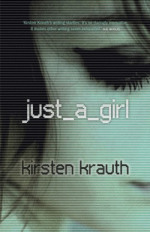
just-a-girl-krauthThis book should come with a warning.

Anyone who cares for – or has been – a sexually precocious adolescent girl, be prepared for an emotionally harrowing read.

just_a_girl tears into the fabric of contemporary culture. A Puberty Blues for the digital age, a Lolita with a webcam. It’s what happens when young girls are forced to grow up too fast Or never get the chance to grow up at all. (Source: back cover copy)

I haven’t read Puberty Blues, but I did read Lolita in my early twenties and hated it. I think anyone who, like me, experienced the trauma of being repeatedly ‘interfered with’ by a sexual predator from a very early age, and subsequently became sexually precocious, would cringe with painful identification at how vulnerable young girls can be when first exploring their sexuality.

Maybe you wouldn’t need to have a history of childhood sexual assault (CSA) to have that reaction to Nabokov’s classic; I don’t know. But the author’s ‘beautiful’ writing did nothing to compensate me for the trauma of reliving the horror, the reminder of how easily seduced one can be by an older man, if you have such a history; how needy, how lonely and lost; how at the mercy of others’ violence, sexual perversity and power plays. It was a confronting and, for me, very distressing read.

Apart from my own visceral reaction, another reason why I hated Lolita – and why I’ve never been able to bring myself to reread it or to explore Nabokov’s other books – was that, while I recognized Lolita’s behaviour, I didn’t think Nabokov had her motivation right. I didn’t believe in the child-woman ‘tease’, the girl who is attracted to and exercises her sexual power over much older men; I didn’t think she could spring out of nowhere. My unconscious assumption, I realize now, was shaped by my own history. I thought such behaviour had to stem from CSA; I couldn’t see how it could be a ‘dance’ played between the adult man-who-should-know-better and an adolescent girl who simply doesn’t realize the dangers of exercising her sexual power. (If I’m mis-remembering Lolita, forgive me. Maybe I’ve blanked out Lolita’s back story.) For me Nabokov’s way of viewing the interplay seemed to elide the experience of the girl, denying her victimhood: it was a story a man might have written out of ignorance, I thought, a man who couldn’t know the full story.

However, reading Kristin Krauth’s just_a_girl, I find myself questioning my assumptions. Here’s Layla, a teenaged character self-consciously acting like a 21st-century Lolita, written by a woman. A 14-year-old girl with no apparent history of early childhood CSA, Layla is right out there sexually with men twice her age and more, and getting herself into potentially life-threatening trouble as a result.

The risks Layla takes are, for me, horrifying.

The most horrifying aspect is, as Krauth suggests very convincingly, that any teenaged girl might find herself acting like a Lolita; girls who – like Layla – have suffered the trauma of a father’s abandonment or absence, a mother’s post-natal depression, personal feelings of isolation and social dislocation, the pain of ‘growing up’ – ordinary, if distressing, life circumstances and events. If Krauth is right, then so perhaps was Nabokov, something I’ve resisted believing for years. Maybe adolescent girls – especially in the internet age – face a much greater danger than I realized. The danger, it would appear, is in themselves, not because of what someone has done to them. That is the truly frightening premise of just-a-girl. It could be your daughter, niece or granddaughter. It might have been you at that age.

So have I had it wrong? Are some ordinary teenaged girls ‘just like that’?

Maybe I’m not giving Krauth enough credit for subtlety.

Krauth does, in fact, lay the seeds of a different understanding of Layla’s behaviour, one that fits better with my own intuition. It’s not just the girl’s history we need to take into account, Krauth suggests, but also that of the generations that have gone before her: her parents and what shaped their relationship, her mother’s childhood experience, and the abuses and suffering of previous family members. In this systemic context Layla’s vulnerability makes sense. Layla’s god-fearing mother is a reformed addict, whose first marriage was to a closeted gay man; she comes from a history of family abuse and, like Layla, is vulnerable to a sexual predator. Layla’s seeming obliviousness to her own trauma isn’t because it doesn’t exist; it’s because she is in denial and ‘acting out’, indulging in risk-taking behaviour as a defence mechanism. All this, to me, is psychologically convincing. In this reading (which I find more saddening than alarming), Krauth suggests that such dangerous precocity doesn’t, after all, spring out of nowhere, and the girl – however sexualised her behaviour – isn’t to blame for what happens to her, even though, on first reading, her recklessness would appear to be a contributing factor.

If you’re prepared to be confronted by a talented new voice in Australian fiction, read just_a_girl and let me know what you think.

For less personal accounts of Krauth’s debut novel see:

~

Title: just_a_girl
Author: Kirsten Krauth
UWA Publishing 2013
ISBN: 9781742584959

This response to the novel counts towards the Australian Women Writers Challenge and Aussie Author Challenge. Copy kindly supplied by the publisher. 
Satire or sensationalism? Caroline Overington’s No Place Like Home

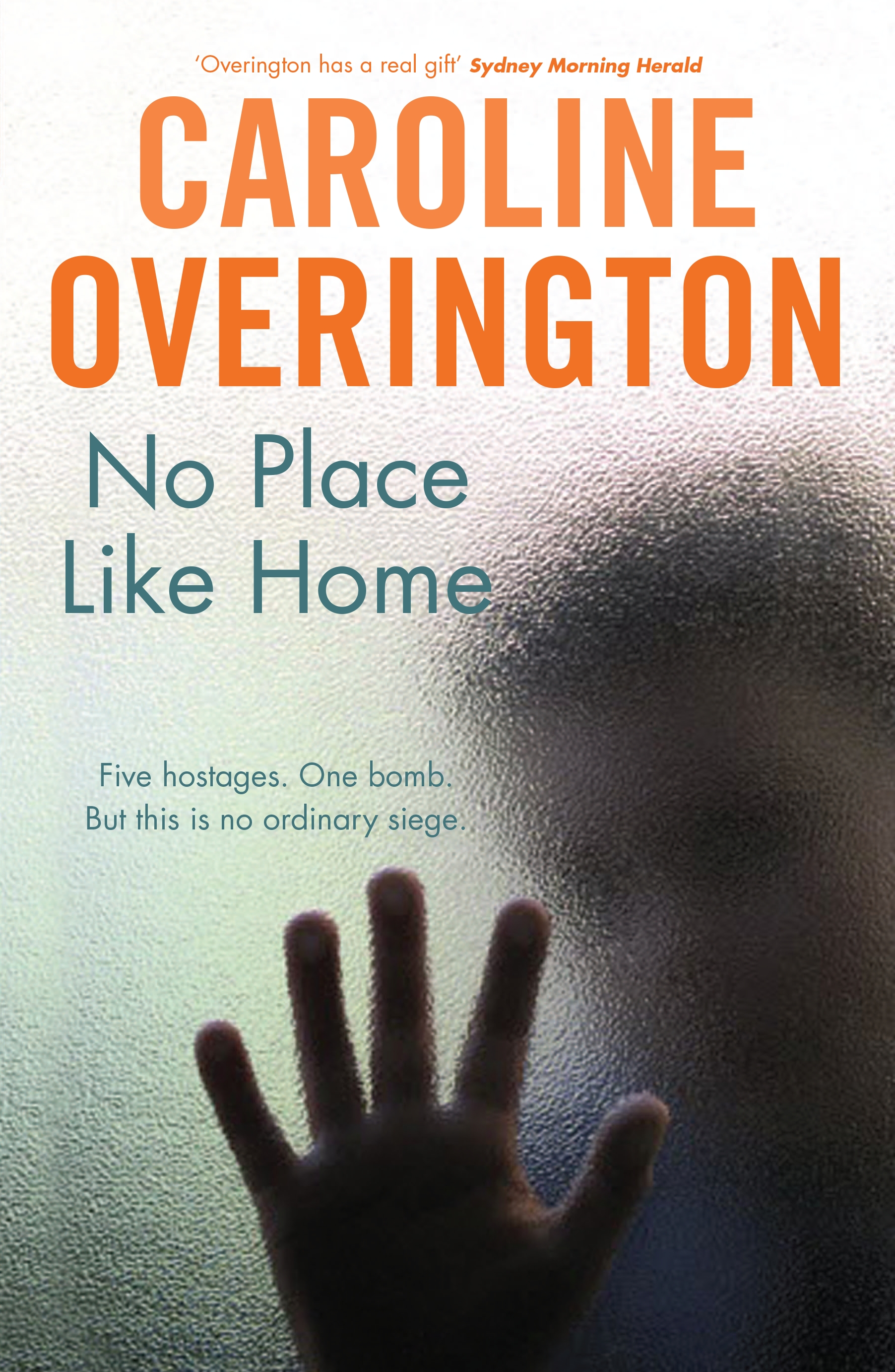
No Place Like Home Cover ImageEver get the feeling that the book you’ve just finished reading and the one by the same title being lauded in reviews isn’t the same book?

That’s how I felt after finishing Caroline Overington’s latest, No Place Like Home.

Overington’s previous book, Sisters of Mercy (reviewed here), had me fuming, so I wasn’t surprised to find No Place Like Home equally provocative. What did surprise me, though, was how different from mine were other reviewers’ reactions to the novel. Where I’d felt angry, by contrast, the ending left more than one other reviewer feeling sad. Whereas I found the narrator shallow and deeply problematic ethically, another thought him “likeable and moderate in his thinking”. Where I saw the majority of the characters as caricatures, others found these figures believable. Where one reviewer regarded the novel to have been written with compassion, I saw, through the eyes of a deeply flawed narrator, a disgust and contempt for the flaws of other human beings.

Were we reading the same book?

No Place Like Home was published this month by Bantam Australia, an imprint of Random House. In her 30 second pitch for The Book Circle, Overington describes the book as “unashamedly a thriller”. Its premise is simple:

A young man walks into a shopping centre. He’s wearing a hoodie zipped up to his neck. He starts to run, security guards start to chase him, and he gets into a shop, where he’s locked in. The idea for the reader is: Who is he? How will he get out? And will the people stuck in the shop with him also get out alive?

The narrator is a former police chaplain who recounts the events of that day. No reason is given as to why this ex-priest elects to tell all – and to betray, as he does, the confidences of people whom he was paid to counsel after their ordeal. Seemingly to satisfy his own curiosity and exploit the sensationalism surrounding the day’s events, he exposes to public gaze the private foibles and flaws of those involved, their hypocrisies, narcissism and, at times, downright stupidity.

The young man at the centre of the “hostage crisis”, Ali Khan/Nudie, is an Australian citizen. As an immigrant and one-time refugee from Tanzania, he has been let down by his community, his rescuer, the Department of Immigration, his landlady, African community outreach workers, and now police hostage negotiators and bystanders. Few are exempt from the priest’s scathing criticism. There’s Marj, who took in Nudie only to reject him, an urban Greens-voting do-gooder; she was disappointed that “her refugee” wasn’t tall and black, someone “that she could parade around, showing how tolerant she was”, but instead was grey in skin colour, possibly Albino, an outcast from his own community. The priest opines:

I got the feeling that Marj got involved because she’s always got to be involved in something, and if it’s on the Left, it’s for her.”

There’s the bystander/victim held “hostage” by Nudie, the real estate agent from Melbourne, with his shallow, spendthrift wife, and attention-grabbing stripper girlfriend. There’s the African community worker who ran from Nudie, screaming about “evil”, instead of helping him. There’s the priest-narrator himself, lacking in self-awareness (“Everyone’s entitled to their opinion. I tend not to give mine”), standing in judgement over others while ignorantly referring to refugee boat arrivals as “illegal” and “queue-jumping”.

When I asked via Twitter who else was reading No Place Like Home, one tweep answered, “I would rather eat my hands than read another of her novels. Overblown, sensationalist tripe.”

That got me thinking.

I like reading Overington’s books, even while I suspect her politics and mine are vastly different. I like that her work provokes and outrages me, that she brings up issues of morality, ethics and social justice in her writing, and that she takes vicious stabs at “political correctness”. I don’t find her writing realistic, heartwarming or even insightful, but does it have to be? Perhaps there’s a different way of reading it.

Is No Place Like Home satire? Is that how it should be read?

As an undergraduate, I read Candide, the poems of Alexander Pope, Gulliver’s Travels, Huckleberry Finn, The Trial and 1984; more recently, I was provoked by Gillian Flynn’s Gone Girl (reviewed here); all of these could be described as satire. It’s not my preferred genre and I can’t say I really have a handle on it, but I think Overington’s work might fit this category. Wikipedia says of the Roman poet Juvenal, one of the first proponents of satire: “In a tone and manner ranging from irony to apparent rage, Juvenal criticizes the actions and beliefs of many of his contemporaries, providing insight more into value systems and questions of morality and less into the realities of Roman life.” (source) Australian satirist David Foster has been described by Susan Lever in the following terms:

[H]is writing sets itself deliberately against the favourite beliefs of the educated readers who are most likely to read it. His work is opinionated, misanthropic… Foster is a novelist of ideas rather than character; readers cannot slip into sympathetic identification with his characters because they exist to express ideas rather than individual psychologies. (source)

It’s my view that Overington’s work can also be read in these terms and, as satire – a genre traditionally associated with male writers and deemed “unladylike” – it’s worth reading.

In British Women Writing Satirical Novels in the Romantic Period, Lisa M Wilson notes:

[R]eviewers of the period seem to have been as likely to praise or to condemn a satirical novel based on their opinion of the author’s politics as of the author’s gender.

I’d prefer not to do that.

No Place Like Home is compelling reading. The reader wants to know what happens next, and along the way Overington ranges over several of the most important questions facing Australia today. What kind of country do we want to be? What kind of generation do we want to be remembered as? A generation which has allowed dog-whistle politics to whip up feelings of invasion and xenophobia, instead of tolerance and compassion? People who fail to act to restrain greenhouse gas emissions, only to have our government’s policy of “stop the boats” overwhelmed by a tidal flood of global human migration when sea levels begin to flood low-lying countries? It’s exciting to see such issues being addressed in popular fiction.

One of the bonuses of reading and reviewing for the Australian Women Writers Challenge* has been discovering the diversity of political opinions among our talented contemporary women writers. I’m grateful for authors who can tackle big questions from all sides of politics – even if I don’t like the values they or their characters appear to espouse. Anger, the dominant emotion I see being conveyed and evoked by Overington’s writing, can be a powerful tool for change. Harnessed in a compelling narrative in simple-to-read language, it may reach a wide audience of people who don’t normally read. (“Not everyone knows what an inquest is,” says Overington’s priest-narrator, before going on to explain.) My hope is that this book will inspire its readers to think about the values they hold and why, not simply reinforce their prejudices. My fear is that some readers may not be able to distinguish between Overington and her ignorant narrator. Rather than criticise Overington’s work for its simplifications and the shallowness of its characters, however, I’d prefer to see it in terms of its strengths. No Place Like Home is thought-provoking and challenging, and a page-turning read.

* If you’re interested in finding out more about the Australian Women Writers Challenge, please read this recent article published by if:book Australia.

~

This review counts towards my contribution to the Australian Women Writers Challenge (AWW) and the Aussie Author Challenge

Author: Caroline Overington
Title: No Place Like Home
ISBN: 9781742758015
Published: 01/10/2013
Imprint: Bantam Australia
Review copy (ebook) kindly supplied by Random House Australia via Netgalley.

Thriller debut – I Am Pilgrim by Australian author Terry Hayes

I-am-pilgrim-hayesTerry Hayes’ debut novel, I Am Pilgrim, is a blockbuster spy thriller which shows all the author’s narrative skills as a seasoned screenwriter. Seemingly written with Hollywood in mind, it is highly visual, and has multiple twists and turns to keep even the most reluctant reader riveted to the page (or, in my case, the iPad) until long into the night.

A lengthy 704 pages, the story ranges over settings as diverse as New York, Saudi Arabia, the Hindu Kush and Turkey. It combines an identity-troubled protagonist, reminiscent of Robert Ludlum’s Jason Bourne, with comic-book-like action typical of a James Bond movie. (There are probably better contemporary examples, but this isn’t really my genre.)

The narrative is ostensibly told in the first person and jumps forwards and backwards in time, as motivations and back stories are filled out. The premise, a terror threat which could bring down the United States, if not the entire Western World, is alarmist and frightening; and Hayes’ narrative manipulations make the scenario in all its permutations seem – almost – believable. With at times clunky foreshadowing, Hayes never lets the reader forget the magnitude of the imminent threat, and pointed references to genocide, such as the narrator’s quote from an Auschwitz survivor, attempt to give the story an epic quality:

There was one thing the experience had taught him. He said he’d learned that when millions of people, a whole political system, countless numbers of citizens who believed in God, said they were going to kill you – just listen to them.

As well as telling his own story, Hayes’ narrator retells events as if from the points of view of other pivotal characters, including the Muslim terrorist-antagonist. The built-in unreliability of the narrator, in my view, narrowly saves the story from being a crude exploitation of complex political, religious and ideological tensions between the West and radical Islam for entertainment purposes. Narrowly, I say, because the narrator’s unreliability is only hinted at, rather than fully drawn. It could be easy for some – many? most? – readers to accept on face value the narrator’s self-serving account of events, and to regard him as a hero, rather than the flawed, ethically and morally suspect anti-hero I would like to think Hayes intends him to be. (We might have to wait for another book featuring this narrator to judge what Hayes has in mind here.)

Who will enjoy this book? Anyone who likes morally ambiguous, page-turning thrillers. Who might hate it? People who don’t buy my unreliable narrator argument and who can’t bring themselves to switch off their critical facilities long enough to enjoy James Bond.

For me, I couldn’t put it down.

~

Author: Terry Hayes
Title: I Am Pilgrim
ISBN: 9780593064955
Published: Random House, 01/08/2013
Imprint: Bantam Press
Review copy kindly supplied by publisher.
This review counts towards my 2013 Aussie Author Challenge.