
‘ A useful reminder that the system is fallible’ – Rough Justice: True Crime by Robin Bowles

rough-justiceThis is a challenging look at the criminal justice system. At a time when governments have responded to the fear of terrorism with extreme measures, it is a useful reminder that the system is fallible. Julian Burnside QC, quoted on the cover of Rough Justice
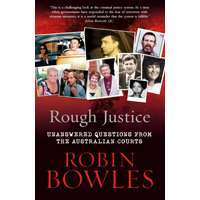
I picked up my copy of Rough Justice by Robin Bowles through a discount online bookstore over a year ago and it has been sitting on my shelves waiting for a moment when I had the time and inclination to pick it up. That moment came this week when I tripped and gashed my knee, forcing me to take time off. What better way to recover from an injury than to read. As I’m currently writing a novel which involves crime, the “true crime” genre appeals to me: I welcome any insights I can glean into the workings of police, investigative journalists, prosecutors and defence lawyers, as well as the courts, as background material for my fiction. Rough Justice provides plenty of such insights.

Bowles’ book is subtitled “Unanswered Questions from the Australian Courts” and it certainly raises more questions than it answers. It discusses eight cases, three in Victoria, one each in South Australia, Western Australia, the Northern Territory, Queensland and New South Wales. Some of the cases are well known, including that of Bradley Murdoch, convicted of murdering British backpacker Peter Falconio; and of Greg Domaszewicz, who, despite having been acquitted of murdering toddler Jaidyn Leskie, subsequently had a coronial finding against him. Other cases are less well known, at least to me. In each case, the defendants have protested their innocence. Several have been exonerated; others are still fighting for “justice” – or, at least, to clear their names.

But what is “justice”? That’s the real unanswered question this book poses.

Bowles looks at the processes behind these cases and reveals grave flaws in the judicial system. Her discussion identifies various points at which an innocent person can be unjustly convicted, including incompetence in how evidence is gathered or interpreted, possible police corruption and coercion of witnesses, bias created in the minds of both witnesses and potential jurors by the media, and flawed judicial proceedings. The problems, she suggests, come from our adversarial system which demands two sides play off against one another; the winner, she implies, is often the side with the deepest pockets. Thus wealth, privilege and class – or the lack of these – ensure not a “fair” trial, but what can be successfully argued in court, a recipe for creating an underclass who risk being incarcerated simply because they are too poor to mount a convincing defence.

Readers of reviews on my blog may know of my ambivalence to the fiction of Caroline Overington. Despite being riveted by Overington’s tales, I’m left with an uneasy feeling resulting from a forced encounter with moral ambiguity. I experience something similar when reading Bowles’ book. In her efforts to tell two (or more) sides of the story, Bowles, I feel, manipulates me; it’s as if I’m being drawn to form one opinion, only for the facts subsequently to be presented in an equally convincing, sometimes opposite way. It’s a clever ploy, as it reinforces the book’s theme and underlines the problems faced by police, investigators, jurors and judges in deciding what is “true”. Often, it appears to come down to, not what is true but what is “believable”, and that is restricted by the evidence known or presented at any one time.

I’m also made uneasy by the subtext about class, derived by way of language. In looking for information about these cases online, I came across a thread on a website where people (the “public”) were giving their opinions on the Jaidyn Leskie murder. One commentator mentioned how so many of these sensational cases involve communities where people have names that are spelled with “yn”, instead of (presumably upper-class) names like “Jeremy”. This (somewhat bizarre) comment made me think. Both Favel Parrett in Past the Shallows and Tara June Winch in Swallow the Air write about poor, uneducated protagonists; but both authors depict these protagonists’ worlds using language which is richly poetic. The authors’ beautiful prose has the effect of dignifying the poverty and tragedy of their characters’ lives. Both Bowles and Overington, by contrast, use plain language – a “journalistic” style – combined with, at times, the idioms consistent with the class, background and education of the people they write about; this plainness – and, at times, crudeness – does nothing to disguise the poverty of these people’s lives and values. As readers, we’re forced into an uncomfortable position. Are we meant to judge or empathise with these people? Do we stand above, or do we consider “them” to be our equals?

Bowles weighs down, in my view, on the side of empathy for the defendants, not because she demonstrates their innocence or virtue, but because she shows how these people – guilty or innocent – are equally screwed by the system. At the same time, she shows how they’re equally capable of screwing the system in return – and so is she. At one point, she describes how Denis Tanner, a man who was found by a coroner to have shot his sister-in-law, had an entirely separate charge of assault brought against him. Bowles writes:

At one point, he was charged with whacking a photojournalist in the testicles with his heavy briefcase as he left the coroner’s court. He was acquitted because a visit by the Magistrate’s Court to the scene of the alleged ‘crime’ showed that the police witness who said he saw the whole thing couldn’t have seen anything from his office because of a tree outside his window. They didn’t ask me, though. I saw everything! (161)

What did Bowles see? She doesn’t state. But “everything” could hardly be “nothing”. It’s hard to escape the conclusion that, for Bowles, in this instance at least, seeming impartiality and actual complicity are one and the same thing. It could be a metaphor for the equally fraught nature of the Australian justice system. Perhaps it was intended to be.

~

Author: Robin Bowles
Title: Rough Justice: Unanswered Questions from the Australian Courts
Publisher: The Five Mile Press
Date: 2007
ISBN: 9781741786606

This review counts towards both the Australian Women Writers Challenge 2014 and the 2014 Aussie Author Challenge.
Satire or sensationalism? Caroline Overington’s No Place Like Home

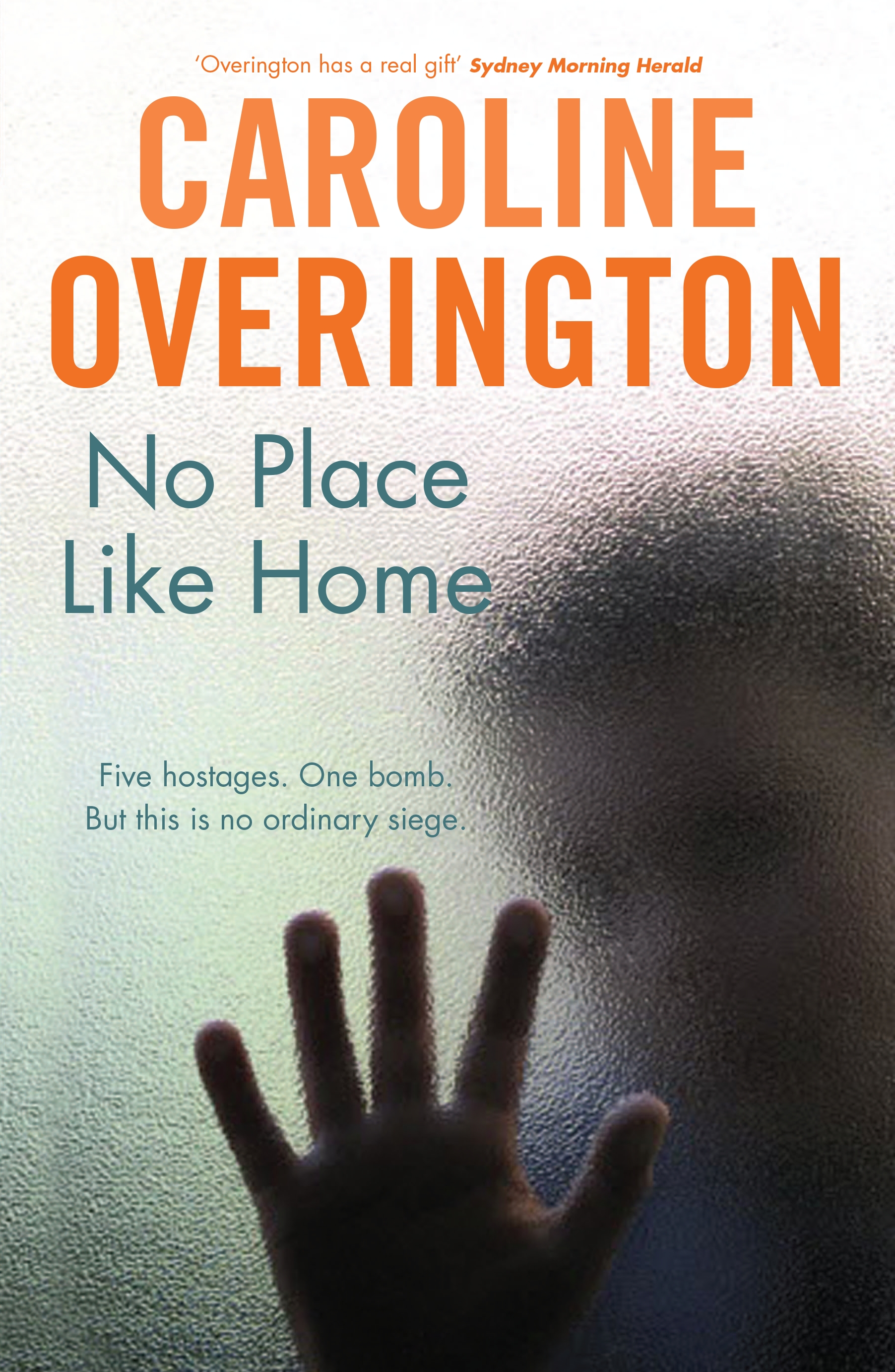
No Place Like Home Cover ImageEver get the feeling that the book you’ve just finished reading and the one by the same title being lauded in reviews isn’t the same book?

That’s how I felt after finishing Caroline Overington’s latest, No Place Like Home.

Overington’s previous book, Sisters of Mercy (reviewed here), had me fuming, so I wasn’t surprised to find No Place Like Home equally provocative. What did surprise me, though, was how different from mine were other reviewers’ reactions to the novel. Where I’d felt angry, by contrast, the ending left more than one other reviewer feeling sad. Whereas I found the narrator shallow and deeply problematic ethically, another thought him “likeable and moderate in his thinking”. Where I saw the majority of the characters as caricatures, others found these figures believable. Where one reviewer regarded the novel to have been written with compassion, I saw, through the eyes of a deeply flawed narrator, a disgust and contempt for the flaws of other human beings.

Were we reading the same book?

No Place Like Home was published this month by Bantam Australia, an imprint of Random House. In her 30 second pitch for The Book Circle, Overington describes the book as “unashamedly a thriller”. Its premise is simple:

A young man walks into a shopping centre. He’s wearing a hoodie zipped up to his neck. He starts to run, security guards start to chase him, and he gets into a shop, where he’s locked in. The idea for the reader is: Who is he? How will he get out? And will the people stuck in the shop with him also get out alive?

The narrator is a former police chaplain who recounts the events of that day. No reason is given as to why this ex-priest elects to tell all – and to betray, as he does, the confidences of people whom he was paid to counsel after their ordeal. Seemingly to satisfy his own curiosity and exploit the sensationalism surrounding the day’s events, he exposes to public gaze the private foibles and flaws of those involved, their hypocrisies, narcissism and, at times, downright stupidity.

The young man at the centre of the “hostage crisis”, Ali Khan/Nudie, is an Australian citizen. As an immigrant and one-time refugee from Tanzania, he has been let down by his community, his rescuer, the Department of Immigration, his landlady, African community outreach workers, and now police hostage negotiators and bystanders. Few are exempt from the priest’s scathing criticism. There’s Marj, who took in Nudie only to reject him, an urban Greens-voting do-gooder; she was disappointed that “her refugee” wasn’t tall and black, someone “that she could parade around, showing how tolerant she was”, but instead was grey in skin colour, possibly Albino, an outcast from his own community. The priest opines:

I got the feeling that Marj got involved because she’s always got to be involved in something, and if it’s on the Left, it’s for her.”

There’s the bystander/victim held “hostage” by Nudie, the real estate agent from Melbourne, with his shallow, spendthrift wife, and attention-grabbing stripper girlfriend. There’s the African community worker who ran from Nudie, screaming about “evil”, instead of helping him. There’s the priest-narrator himself, lacking in self-awareness (“Everyone’s entitled to their opinion. I tend not to give mine”), standing in judgement over others while ignorantly referring to refugee boat arrivals as “illegal” and “queue-jumping”.

When I asked via Twitter who else was reading No Place Like Home, one tweep answered, “I would rather eat my hands than read another of her novels. Overblown, sensationalist tripe.”

That got me thinking.

I like reading Overington’s books, even while I suspect her politics and mine are vastly different. I like that her work provokes and outrages me, that she brings up issues of morality, ethics and social justice in her writing, and that she takes vicious stabs at “political correctness”. I don’t find her writing realistic, heartwarming or even insightful, but does it have to be? Perhaps there’s a different way of reading it.

Is No Place Like Home satire? Is that how it should be read?

As an undergraduate, I read Candide, the poems of Alexander Pope, Gulliver’s Travels, Huckleberry Finn, The Trial and 1984; more recently, I was provoked by Gillian Flynn’s Gone Girl (reviewed here); all of these could be described as satire. It’s not my preferred genre and I can’t say I really have a handle on it, but I think Overington’s work might fit this category. Wikipedia says of the Roman poet Juvenal, one of the first proponents of satire: “In a tone and manner ranging from irony to apparent rage, Juvenal criticizes the actions and beliefs of many of his contemporaries, providing insight more into value systems and questions of morality and less into the realities of Roman life.” (source) Australian satirist David Foster has been described by Susan Lever in the following terms:

[H]is writing sets itself deliberately against the favourite beliefs of the educated readers who are most likely to read it. His work is opinionated, misanthropic… Foster is a novelist of ideas rather than character; readers cannot slip into sympathetic identification with his characters because they exist to express ideas rather than individual psychologies. (source)

It’s my view that Overington’s work can also be read in these terms and, as satire – a genre traditionally associated with male writers and deemed “unladylike” – it’s worth reading.

In British Women Writing Satirical Novels in the Romantic Period, Lisa M Wilson notes:

[R]eviewers of the period seem to have been as likely to praise or to condemn a satirical novel based on their opinion of the author’s politics as of the author’s gender.

I’d prefer not to do that.

No Place Like Home is compelling reading. The reader wants to know what happens next, and along the way Overington ranges over several of the most important questions facing Australia today. What kind of country do we want to be? What kind of generation do we want to be remembered as? A generation which has allowed dog-whistle politics to whip up feelings of invasion and xenophobia, instead of tolerance and compassion? People who fail to act to restrain greenhouse gas emissions, only to have our government’s policy of “stop the boats” overwhelmed by a tidal flood of global human migration when sea levels begin to flood low-lying countries? It’s exciting to see such issues being addressed in popular fiction.

One of the bonuses of reading and reviewing for the Australian Women Writers Challenge* has been discovering the diversity of political opinions among our talented contemporary women writers. I’m grateful for authors who can tackle big questions from all sides of politics – even if I don’t like the values they or their characters appear to espouse. Anger, the dominant emotion I see being conveyed and evoked by Overington’s writing, can be a powerful tool for change. Harnessed in a compelling narrative in simple-to-read language, it may reach a wide audience of people who don’t normally read. (“Not everyone knows what an inquest is,” says Overington’s priest-narrator, before going on to explain.) My hope is that this book will inspire its readers to think about the values they hold and why, not simply reinforce their prejudices. My fear is that some readers may not be able to distinguish between Overington and her ignorant narrator. Rather than criticise Overington’s work for its simplifications and the shallowness of its characters, however, I’d prefer to see it in terms of its strengths. No Place Like Home is thought-provoking and challenging, and a page-turning read.

* If you’re interested in finding out more about the Australian Women Writers Challenge, please read this recent article published by if:book Australia.

~

This review counts towards my contribution to the Australian Women Writers Challenge (AWW) and the Aussie Author Challenge

Author: Caroline Overington
Title: No Place Like Home
ISBN: 9781742758015
Published: 01/10/2013
Imprint: Bantam Australia
Review copy (ebook) kindly supplied by Random House Australia via Netgalley.

Thriller debut – I Am Pilgrim by Australian author Terry Hayes

I-am-pilgrim-hayesTerry Hayes’ debut novel, I Am Pilgrim, is a blockbuster spy thriller which shows all the author’s narrative skills as a seasoned screenwriter. Seemingly written with Hollywood in mind, it is highly visual, and has multiple twists and turns to keep even the most reluctant reader riveted to the page (or, in my case, the iPad) until long into the night.

A lengthy 704 pages, the story ranges over settings as diverse as New York, Saudi Arabia, the Hindu Kush and Turkey. It combines an identity-troubled protagonist, reminiscent of Robert Ludlum’s Jason Bourne, with comic-book-like action typical of a James Bond movie. (There are probably better contemporary examples, but this isn’t really my genre.)

The narrative is ostensibly told in the first person and jumps forwards and backwards in time, as motivations and back stories are filled out. The premise, a terror threat which could bring down the United States, if not the entire Western World, is alarmist and frightening; and Hayes’ narrative manipulations make the scenario in all its permutations seem – almost – believable. With at times clunky foreshadowing, Hayes never lets the reader forget the magnitude of the imminent threat, and pointed references to genocide, such as the narrator’s quote from an Auschwitz survivor, attempt to give the story an epic quality:

There was one thing the experience had taught him. He said he’d learned that when millions of people, a whole political system, countless numbers of citizens who believed in God, said they were going to kill you – just listen to them.

As well as telling his own story, Hayes’ narrator retells events as if from the points of view of other pivotal characters, including the Muslim terrorist-antagonist. The built-in unreliability of the narrator, in my view, narrowly saves the story from being a crude exploitation of complex political, religious and ideological tensions between the West and radical Islam for entertainment purposes. Narrowly, I say, because the narrator’s unreliability is only hinted at, rather than fully drawn. It could be easy for some – many? most? – readers to accept on face value the narrator’s self-serving account of events, and to regard him as a hero, rather than the flawed, ethically and morally suspect anti-hero I would like to think Hayes intends him to be. (We might have to wait for another book featuring this narrator to judge what Hayes has in mind here.)

Who will enjoy this book? Anyone who likes morally ambiguous, page-turning thrillers. Who might hate it? People who don’t buy my unreliable narrator argument and who can’t bring themselves to switch off their critical facilities long enough to enjoy James Bond.

For me, I couldn’t put it down.

~

Author: Terry Hayes
Title: I Am Pilgrim
ISBN: 9780593064955
Published: Random House, 01/08/2013
Imprint: Bantam Press
Review copy kindly supplied by publisher.
This review counts towards my 2013 Aussie Author Challenge.